Food. Drink. Fun.
advertisement

stories: The Ten

10 Ways to Save at the Grocery Store

Stretch your food dollars

By Roxanne Webber

Recession or no recession, budget-minded shopping is smart shopping. But saving money doesn’t mean compromising on quality, healthiness, or flavor. You may already be cutting back on meat or eating out; here are some more ideas on how to rein in your food expenses.

1. Pick and Choose Which Organics You Buy. Save on the items where buying organic doesn’t give you as much benefit, like onions and avocados. These crops retain the least pesticide residue (peaches and apples are the worst, according to the Environmental Working Group), so if you buy organic for that reason, you can feel OK about purchasing some conventional produce.

2. Skip the Deli Counter. It’s not very hard to roast your own turkey or beef for sandwiches, and you’ll enjoy substantial savings. Even precut turkey tenders are about $4 cheaper per pound if you roast and slice them yourself versus the $8.99-per-pound roasted turkey at the deli. Plus you can season it exactly how you like. If you’re not very well versed in roasting meat, invest in a cheap meat thermometer and you’ll feel a lot more confident.

3. Make Your Own Granola. Even in bulk, granola and cereal are expensive (we found them in the $3- to $8-per-pound range). Put a few cups of plain rolled oats on a baking sheet; toast them in the oven for about 20 minutes (stirring once); toss them with about a quarter cup of honey, some vanilla, a little bit of brown sugar, and a tablespoon of vegetable oil; then put them back in the oven for another 15 to 20 minutes, and you’ll have a base to which you can add whatever dried fruit and nuts you want, like this recipe for peanut butter and coconut granola.

4. Buy Spices in Small Amounts. Spices are often used in very small amounts, so don’t waste money on the big jars at the grocery store. Instead, see if you can find what you need at ethnic markets, where we’ve found the spices packed in little plastic envelopes to be considerably cheaper. If you have a store in your area that offers bulk spices, buy only as much as you need.

5. Don’t Pay a Premium for Health Fads. Pomegranate juice is a darling of superfoods enthusiasts, bartenders, and chefs, but it carries a hefty price tag. Christie Matheson, co-author of Wine Mondays: Simple Wine Pairings with Seasonal Menus, suggests using less expensive cranberry juice (look for the highest percentage of juice), which has the same “tart, tangy flavor, lends a pretty scarlet hue to cocktails, and comes loaded with antioxidants.” It’s about $3 to $6 cheaper per quart.

6. Find Sparkling Alternatives. Real Champagne is expensive. If you want to drink some bubbles, Matheson suggests popping open a cheaper bottle of Spanish cava. It’s “made according to the same traditional method, and can be just as dry and delicious.”

7. Make Mock Maple Syrup. When things were tight growing up, my mom would simmer brown sugar with water and whatever spices were on hand (say, a vanilla pod that might otherwise be tossed after scraping) to make syrup for pancakes and waffles. It’s good, and it keeps you away from the nasty commercial substitutes out there if you can’t afford to buy the real stuff.

8. Create Snacks from Scratch. Prepared foods like pesto and hummus cost $4 to $6 for a tiny package, but they’re easy to make. For hummus, put a can of garbanzo beans in the blender with some lemon juice, garlic, salt, a dash of olive oil, and, if you have it, a dollop of tahini, then purée. You can throw in whatever else you like at this point: herbs you might need to use up, olives, roasted peppers, etc. Likewise with pesto: Skip the $6 package and buy a bunch of basil, then put the leaves in the blender with olive oil, garlic, salt, and a handful of nuts (pine nuts are traditional, but you won’t miss them if you use less expensive almonds or walnuts).

9. Use Substitutions for Fancy Ingredients. Crème fraîche is a sour cream–like ingredient common in recipes like our Savory Onion and Leek Tart and Winter Greens Lasagne, but it can cost nearly $10 per pound, and might be hard to find. Chowhounds suggest using sour cream instead, or you can make this simple version suggested by Matheson: “Sanitize a small nonreactive bowl in your dishwasher or boiling water, combine 1 1/2 teaspoons of buttermilk with 1/2 cup of heavy cream, cover the bowl, and let it sit at room temp for 24 hours. Stir it and use it, or keep it covered in the fridge for up to a week.”

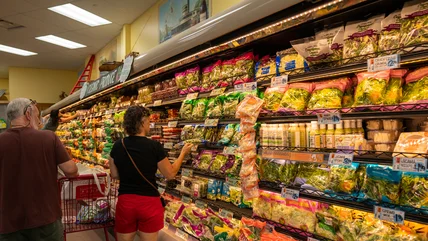
10. Chop Your Own Greens. Bagged salad mixes are a terrible value. Instead, buy a fresh head of lettuce, and when you unpack your groceries spend an extra five minutes washing, drying, and chopping it up, then store it in a bag in the refrigerator. It’ll be just as convenient, fresher, and cheaper.

More tips from Chowhounds on budget cooking:
ideas for a (new) very tight food budget
What’s your “cooking budget?”
Best budget meals…need suggestions
Cooking on a budget. Recipes please!
Eating on a Budget
Budget Meals, no meat
How to wow on a budget

CHOW’s The Ten column appears every Tuesday.
Roxanne Webber is an associate editor at CHOW.

Published February 02, 2009

Comments

Absolutely disagree about maple syrup - a natural product made from tree sap.

Buy a tin of it, not a fancy bottle, and use is sparingly. It can be frozen.

Why is creme fraiche so expensive in the US? In my local supermarket in the UK it's 6p more expensive than sour cream per 100ml (about $1.55 for a 300ml tub of creme fraiche as apposed to $1.32 for the same amount of sour cream), which doesn't seem a a huge difference. It also doesn't seem to have the same 'luxury' status here. Can anyone shed any light?

Ah, yes,
The solution to reducing my grocery bill is clearly going to be cutting down on real champagne......

Ok, my main problem is while I am willing to try other options, my husband does not like beans, lentils, fish, most vegetables (he will eat onions and green peppers and mushrooms), soup other than chicken noodle, etc. Thankfully he will eat rice. I'm trying options like learning Mexican cuisine (he is part Mexican) and Asian cuisine (because we like some of that too).

So what options do I have for a picky eater? Although we do not have kids yet, it's very hard for me to cook.

I have been doing a pretty good job of using coupons for things we actually use and also checking prices per oz on packages. That seems to help. Any ideas???? Thanks!

Tips not included--buy bulk. If you can find a local grocery store or health food store with a bulk section it can be a huge savings on dry goods like rice, grains, cereal nuts, beans spices and others. The bulk section at my supermarket is also all organic and is cheaper than the non-organic stuff in the aisles.

Also--buy local and in season. I know this isn't the case everywhere in the country, but my local farmer's market is far cheaper than the produce section at the supermarket. The produce there is much fresher, too. Our local CSAs are also cheaper than the supermarket in the long run. It's a bigger up front expense, but it works out to be more fresh veggies for a cheaper price over the length of a season.

rweater gives two really solid tips above. our biggest money saver is eating more dry goods from the bulk section. pilafs, risottos, white bean soups, mujaddara, black beans and rice, lentil soups, quinoa salads, the list goes on and on, its good and healthy and very affordable. CSA's are also a big money saver, and farmer's markets can be if you shop carefully. regardless of where you shop, out of season stuff from the other side of the globe is always going to be a money drain.

and, no way am i going to cut out real maple syrup for some boiled brown sugar. i buy a big tin in the fall to last me a long time, and don't eat a lot of sweet pancake-y breakfasts, mostly just drizzle a little on my oatmeal. it lasts, and is well worth sacrificing elsewhere.

so how many of these so-called "tips" make a real dent in anyone's actual shopping. The substitution for organics would make a big deal for some people on that I agree, but last time I checked spices, maple syrup, Crème fraîche and champagne were not something that showed up on my grocery list very often. Just another piece of useless filler.

shame on you chowhound.

You've got many great suggestions here. The Organic Trade Association would just caution people against the idea of limiting their organic purchases to a small list of produce items. While there may be merit in this argument, it misses an important point: buying organic is about more than keeping pesticides out of our bodies. It is about supporting a system of sustainable agricultural management that promotes soil health and fertility through the use of such methods as crop rotation and cover cropping, which nourish plants, foster species diversity, help combat climate change, prevent damage to valuable water resources, and protect farmers and farmers’ families from exposure to harmful chemicals. In this sense, buying organic is a commitment to the bigger, more complex picture of which our personal health is a part.

There was a great article on the top 10 items to buy organic, stone fruits, dark green veggies, meat, berries, grains. Things like bananas and avocados witha tough shell on the outside it wasted money going organic.

http://spooninandforkin.com

Be careful assuming that a CSA will save you money. We spent $700, and the quality was barely mediocre. We thought it would be so much food that we could can or freeze the leftovers/extra and save the money in the winter. Wrong!

We got too many bell peppers and too much lettuce, and way too many radishes. The tomatoes were small, not ripe when we got them and they were squishy. One week, we got corn leftover from the Saturday Farmer's Market- on Tuesday.

And to top all of it off, first they delayed the last delivery-twice- then canceled it.

I don't know whether we just experienced a really bad CSA, but it's entirely too much money to try it again.

As far as maple syrup goes, get the real stuff, and the B or C grade if you can find it. The lower grades have a much more interesting flavor.

well agreed with rweater.
buy fresh, buy local.

btw buying local also helps save the planet - cuts back on transporting, packaging and methods to extend shelf life. It also tastes great, and supports local economy.

How about looking at location? Here in Thailand, eating out for each meal is less expensive than eating in. AND gives someone else a living.

careful when calculating savings on roast meat per pound vs raw meat. With the raw meat you have to trim it (0-30% loss with trim depending on cut)
THEN you lose another 25% in weight or so by cooking. Commercial "roasts" don't lose any weight in cooking - they are pumped full of water and vacuum packed and cooked sous vide so the manufacturer's margin improves.

Another jolt to the system is that old chestnut "Do I REALLY need to buy this?"

oh.......................bottled water. LMAO. SO expensive!
When I was a kid (and a teenager) we drank tap water - we also had cordial sometimes. None of us died from this imposition.
Parents called coke and fanta "gut rot" and let us drink it on special occasions.
We ate a cooked dinner.

These days folks consume every beverage known to mankind from an expensively packaged, produced and marketed bottle (landfill) - and then they PAY for the privilege of growing obese and allergic.

The fast food they wash down with it can only be an extra imposition on the household budget - then should we mention the diet pills, cellulite remover, hyper-allergenic garbage and needless support products (unneeded "medical" treatments for problems caused by bad diet and lifestyle.)

now we are REALLY talking huge savings.
Oh - and also cut back on the Cristal if you must. The peasants are watching, and they've run out of cake.

More substantial depressionomic food tips:

1) Potatoes. If you are serious about saving money, have a baked potato for dinner. Crumble some bacon on it and if you feel like splurging go for the sour cream. All in all, we're talking like $2/head at most here.

2) Eggs. OK, so the price of these suckers is rising but still. They are chock full of protein (and yes, cholesterol). But scramble, fry or bake 'em and you can have some cheap eats. As per the potato, crumbling on some bacon never hurt anyone.

3) Bean soups. While soups in general are great, if you want it to pass as a main dish best to feature those beans so something sticks to your stomach. Freeze extra servings for when you can't make rent and if we've learned anything from depressionomics: don't skimp on the crumbled bacon.

yeah to miss lewlew.
real moneysavers and worthwhile tips.
Another goodie is to do a big shop for a big cook up (helps to have a 6 burner stovetop and oven or lots of pots and dishes - and a big freezer).

A mega cook is fun, and its especially rewarding doing a number of slow cooked dishes, braises, slow roasts, pot roasts (poele) and preparing things like en papillote and stuffed items or 'ready to cook'

Then portion and freeze.
Suddenly the microwave and the stovetop move away from pot noodles, bacon and eggs, deep fries and 7-11 cuisine, and used for re-heating great, nourishing, tasty homecooked food at a fraction of the cost of the nasty manufactured stuff.

That sort of stuff spurs an interest too, and you end up doing cheap nasty stuff like eggplants capsicums, zucchinis, mushrooms and turning them into those super-expensive supermarket deli items on the antipasto section with a few simple cooking techniques.

Buying fresh or natural products instead of expensive processed or cooked ones and doing it your self is really empowering and tastes so different.
Homemade jams, syrups, preserves, dried stuff, curry pastes etc.

As another person mentioned, grow your own herbs. Normally if you buy them you get too much and waste a lot in the fridge, or it wilts between uses. Proper handling extends shelf life, but cutting it fresh from your own plants saves a fortune, and it is always at its freshest and best - exactly as much as you need.

Easy things to grow are kaffir lime leaves, chillies, lemongrass, mint, parsley, rosemary, thyme, vietnamese mint in most places I've lived around the globe.
Space and maintenance is minimal, and as you learn about growing stuff, you may wish to devote some more time or space to trying a couple of new new varieties to replace frequent supermarket of grocery purchases.

Experiment with dried stuff, whole grains and interesting dried proteins and carbs.
There is some interesting, healthy and tasty stuff to play with, and you'll come up with some really rewarding tastes, textures and concepts if you have an interest in food.

If one doesn't mind to be seen slumming it, the stuff from department stores and top end groceries is also available in food barns and 'normal places' where the 'great unwashed' actually shop. <smile. but it seems like it when you see people paying triple for the same stuff in nice packages and trendy bags from large expensive air conditioned department stores in expensive real estate districts>

Just pick up a generic.
Obviously I'm talking about fresh or natural products and not manufactured stuff where it may be manufactured to a lesser standard.
In other words, choose by quality, not brand or label, and buy from a place where the overheads are lower, or where the buying power and price margin policies allow reasonable market pricing.

Most brands package and market to niches in order to promote brand loyalty and charge the maximum price based on image or beliefs in the benefits of the product fostered by their marketing department.
Just my opinion, but I feel it is very valid.

Sorry-- I don't care to accept cranberry juice as a substitute for pomegranate juice! Of course, I'm not downing pomegranate juice by the liter, but when I've had it, I've found the flavor to be something quite a bit more delicious than cranberry juice. I could actually see drinking Cosmopolitans if they were made with pomegranate juice...

But for those who feel compelled to drink it for its (admittedly) faddish health benefits, a better way to save a bit of lucre would be to buy a concentrate-- a POMEGRANATE concentrate. And for that matter, the pomegranate juice I sometimes get at Costco (Ca $6 for half a gallon) is so intense that my husband cuts it with water, at least 50/50. In that sense, the bottle is suddenly half price!

As usual, this article is typical of the level of information I find on the few occasions I look at Chow.

These hints are so basic and address areas which are unlikely to be much of an impact to most cooks. Come on Chow, surely you can do better and dish up something with relevance and actual usefulness.

Opps - clarification:

"Hints" = those in article...
Reader hints were great!

After having creme fraiche and sour cream, why would I have sour cream when I could have creme fraiche -- some things are just recession proof, like standards.

After having creme fraiche and sour cream, why would I have sour cream when I could have creme fraiche -- some things are just recession proof, like standards. However, I concur re: spices -- and some other things like champagne...so my snobby comment is not to put down the author so much as it is to affirm that sometimes we'd rather do without than substitute a poor second.

I would say my best tip is to sign up to all the grocery store flyers and take 20 minutes to read them every week.
You can usually see them all online.

I have found from one store to another the difference for a pineapple could be one store had it for $2 while another is $6 one week....and of course that changes every week.
One week it is more at loblaws the next week it is less than food basics.

Also freezing your own fruit is cheaper than buying already frozen most of the time.

I also find for hummus and lebanese food, it is usually cheaper to go to the small local take out shops and get some there.
Usually they throw in a bunch of pita bread also...saving you from having to buy a whole package.

My last tip is if you like the in store baked breads at loblaws,they sell Ace bakery baguettes and rolls for $3 for a package of 3 baguettes while the same already baked single baguette costs almost $3 for one!
You just bake them in the oven 10 minutes as they are already "half baked", lol!

Using flyers to compare prices is a huge savings but it does mean you will have to shop at more than one store. Hopefully you won't burn more gas doing that than what you save. :-)

Here is a great web page for seeing the Sunday ads from lots of different grocery stores all in one place. http://www.grocerywiz.com/SundayAds.aspx

A few store are missing but it looks like most of them are there.

What do you think?

You need to log in to post a comment.

About/Contact CHOW | Site Map | Newsletters | Mobile | Tags | Feedback | Site Talk | Chowhound : Guidelines : Manifesto : FAQ

Popular on CBS sites: SEC Football | NFL | Video Game Cheats | iPhone | Video Game Reviews | Notebooks | Antivirus Software

About CBS Interactive | Jobs | Advertise

© 2009 CBS Interactive Inc. All rights reserved. | Privacy Policy (UPDATED) | Terms of Use