<?xml version="1.0" encoding="UTF-8"?>
<item>
  <id>10870</id>
  <title>How Green Is Your Takeaway Container?</title>
  <published_at>Mon Jan 07 13:07:00 -0800 2008</published_at>
  <link>http://www.chow.com/stories/10870</link>
  <pubDate>Mon, 07 Jan 2008 21:07:00 GMT</pubDate>
  <short_description>Common carriers rated for ecofriendliness</short_description>
  <long_description>Which takeaway containers are the most (and least) green?</long_description>
  <img>http://www.chow.com</img>
  <author>Elizabeth Gillian</author>
  <category>
    <id>70</id>
    <name>The Ten</name>
  </category>
  <pages>
    <page>
      <page_number>1</page_number>
      <content>
        <![CDATA[<div id="the_ten">

	<p><img src="/assets/2008/09/ten_containers_header.jpg" alt="" /></p>


	<h1>How Green Is Your Takeaway Container?</h1>


<div class="columns">

<div class="inline_column">

<div class="dek">

	<h3>Common carriers rated for ecofriendliness</h3>


	<p class="author">By Elizabeth Gillian</p>


</div>

<div class="images">
<img src="/assets/2008/01/take_away_inline1.jpg" width="160" height="160" border="0"  alt="Styrofoam" /><div class="caption">Styrofoam</div>
<img src="/assets/2008/01/take_away_inline2.jpg" width="160" height="160" border="0"  alt="Plastic containers" /><div class="caption">Plastic</div>
<img src="/assets/2008/01/take_away_inline3.jpg" width="160" height="160" border="0"  alt="Paper bag" /><div class="caption">Paper Bags</div>
<img src="/assets/2008/01/take_away_inline4.jpg" width="160" height="160" border="0"  alt="Cardboard boxes" /><div class="caption">Cardboard Boxes</div>
<img src="/assets/2008/01/take_away_inline5.jpg" width="160" height="160" border="0"  alt="Aluminum foil" /><div class="caption">Aluminum Foil</div>
<img src="/assets/2008/01/take_away_inline6.jpg" width="160" height="160" border="0"  alt="Edible containers" /><div class="caption">Edible Containers</div>
<img src="/assets/2008/01/take_away_inline7.jpg" width="160" height="160" border="0"  alt="BYO bag" /><div class="caption">BYO Bags</div>
</div>

</div>

<div class="right_column">

<div class="intro">

	<p><span class="dropcap">Y</span>our food can&#8217;t go everywhere exposed to the elements; it needs packaging. Unfortunately, that packaging often takes massive amounts of energy to create, and much of it doesn&#8217;t properly decompose. We&#8217;ve rated some common carriers on a scale from 1 (bad) to 5 (good).</p>


</div>

	<p>1. <span class="item mt0"><strong>Styrofoam</strong> (Rating: 1).</span> Ubiquitous clamshells for restaurant leftovers, hot-and-sour soup containers, coffee cups at PTA meetings.<br />
<span class="indent"><strong>The bad news:</strong></span> All research shows that Styrofoam becomes a permanent part of our environment after we use it. Information on the health risks of styrene, which is used in the production of polystyrene plastics and resins, can be found on the <a href="http://www.epa.gov/ttn/atw/hlthef/styrene.html">EPA website</a>. <br />
<span class="indent"><strong>The good news:</strong></span> <a href="http://sfgate.com/cgi-bin/article.cgi?f=/c/a/2006/06/28/MNG65JLQJ411.DTL">Many cities</a> are passing laws that require restaurants to discontinue use of all Styrofoam products. And the options are getting better.</p>


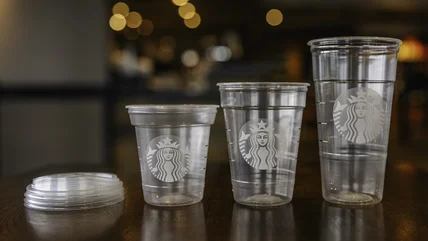
	<p>2. <span class="item"><strong>Plastic</strong> (Rating: 2).</span> Soup, deli salad, and yogurt containers; big soda cups at convenience stores; ice cream sundae dishes.<br />
<span class="indent"><strong>The bad news:</strong></span> Plastic is made from petroleum, a resource in short supply. Plus, many of the chemicals used to produce plastic resins pose serious health risks. Recycling helps a little (check to see if your city accepts plastics, and what types), but there is still significant pollution in the production to consider. <br />
<span class="indent"><strong>The good news:</strong></span> Reducing and reusing can lower the quantity of plastics being produced. But you probably shouldn&#8217;t reuse these containers more than a few times: Potentially harmful chemical compounds have been shown to &#8220;migrate&#8221; from the plastic into your food, particularly if you&#8217;re <a href="http://www.ecologycenter.org/factsheets/plastichealtheffects.html">microwaving the container</a>.</p>


	<p>3. <span class="item"><strong>Paper or Plastic Bags</strong> (Rating: 3).</span> The grocery store, the farmers&#8217; market, the drugstore, your favorite takeout lunch joint.<br />
<span class="indent"><strong>The bad news:</strong></span> Both are pretty environmentally unfriendly. A lot of technical information needs to be weighed when coming up with a definitive answer to which is more green, including recycling rates in your city and the pollution, waste, and energy used to create the bags. The best answer when asked &#8220;Paper or plastic?&#8221; is &#8220;I brought my own canvas bag.&#8221; <br />
<span class="indent"><strong>The good news:</strong></span> Like plastic containers, plastic bags can be reused as garbage bags, lunch bags, etc. Since a tax was introduced in 2002, Ireland has seen a 95 percent reduction in its plastic bag use. Other cities are putting in place similar taxes or banning plastic bags altogether. Paper bags have a shorter life span but can be recycled in many cities.</p>


	<p>4. <span class="item"><strong>Cardboard Boxes</strong> (Rating: 3).</span> Leftover hash browns from brunch, takeaway salad bar from Whole Foods, Chinese takeout, birthday cake in the office break room.<br />
<span class="indent"><strong>The bad news:</strong></span> Many cities don&#8217;t have a composting system that can take food-soiled paper products. A lot of paper products still contain chlorine or bleach, which can be harmful to the environment if it ends up in landfills. And more chemicals are emitted from the paper mills than from the paper itself.<br />
<span class="indent"><strong>The good news:</strong></span> Cardboard that has not been contaminated by food can be recycled along with other papers. (This is preferable, as it can be made into more paper.) But if you can&#8217;t recycle it because it&#8217;s got food on it, many cities have composting programs that will take your dirty cardboard. Or if you&#8217;ve been <a href="http://www.compostguide.com">composting it at home</a>, give it away directly to farms, gardens, and landscaping companies.</p>


	<p>5. <span class="item"><strong>Bioproducts</strong> (Rating: 3).</span> Bioplastics manufactured from starchy agricultural by-products; <a href="http://en.wikipedia.org/wiki/Bagasse">Bagasse</a> plates made from plant fibers such as sugarcane-, wheat-, bamboo-, and rice-based pulps; SpudWare potato-based cutlery; and a <a href="http://www.excellentpackaging.com/pages/1/EPSNature.htm">growing number of brands</a> of corn-based tableware.  
<br />
<span class="indent"><strong>The bad news:</strong></span> Most need special conditions and facilities to biodegrade or be composted, and, like plastics, require energy and scarce resources to produce. When you mix bioproducts in recycling systems, it creates a sorting nightmare and can leave entire batches of recyclable plastic useless. <br />
<span class="indent"><strong>The good news:</strong></span> There is a vested consumer interest in seeing more alternatives to plastic, and better options are being introduced and adopted by restaurants at a rapid clip.</p>


	<p>6. <span class="item"><strong>Aluminum Foil</strong> (Rating: 4).</span> Wrapping for your burrito, naan, falafel, roasted corn on the cob.<br />
<span class="indent"><strong>The bad news:</strong></span> It takes energy to extract and process the metal. And though aluminum is in abundant supply, no resource is infinite. <br />
<span class="indent"><strong>The good news:</strong></span> Aluminum and its alloys can be melted and recast again and again. Check to see if your city&#8217;s recycling program accepts aluminum. At home, you can wash and reuse foil. If aluminum makes it to the landfill, the metal eventually will oxidize, returning to aluminum oxide without the emission of gas or pollutants.</p>


	<p>7. <span class="item"><strong>Recycled Paper Products</strong> (Rating: 4).</span> Some cardboard boxes for salads and leftovers; some napkins and paper towels that come with your takeaway food.
<br />
<span class="indent"><strong>The bad news:</strong></span> There is no labeling process to let consumers know how much of a product is actually recycled material. Ideally, it&#8217;s made of 100 percent recycled paper, which means that no trees were cut down to make it. Anything less than 100 percent means the unrecycled content came from virgin trees. 
<br />
<span class="indent"><strong>The good news:</strong></span> Making recycled paper requires fewer chemicals than making unrecycled paper. It also saves energy, uses less landfill space, saves trees, and reduces pollution in the water and air.</p>


	<p>8. <span class="item"><strong>Edible Containers Made from Food</strong> (Rating: 5).</span> The bread bowl your chowder comes in, ice cream cones, tortilla bowls for taco salad.
<br />
<span class="indent"><strong>The bad news:</strong></span> An edible container may come on a paper plate or other disposable product, thereby negating the benefit of using food to hold food. 
<br />
<span class="indent"><strong>The good news:</strong></span> If it&#8217;s the only thing that&#8217;s put in your hands, it eliminates a lot of waste. If you can&#8217;t finish it all, the pigeons will.</p>


	<p>9. <span class="item"><strong>Inedible Containers Made from Food</strong> (Rating: 5).</span> Banana leaves holding your dim sum rice item or your Indian thali; the corn husk wrapped around your tamale. 
<br />
<span class="indent"><strong>The bad news:</strong></span> As with the edible container, an extra plate or bowl may be given out for serving or transporting. 
<br />
<span class="indent"><strong>The good news:</strong></span> They&#8217;re entirely compostable and nonpolluting, and they can be used both to cook <em>and</em> to transport food.</p>


	<p>10. <span class="item"><strong>Bring Your Own …</strong> (Rating: 5).</span> Canvas bags at grocery stores, Mason jars at some microbreweries and tea salons, coffee mugs at the local java house, Tupperware at the salad bar.
<br />
<span class="indent"><strong>The bad news:</strong></span> There are few negatives. Just remember: It&#8217;s got to be very clean if you&#8217;re going to ask a restaurant to handle it.
<br />
<span class="indent"><strong>The good news:</strong></span> Many grocery stores offer discounts for bringing your own bag. There&#8217;s no waste. You feel good about yourself. It&#8217;s fun.</p>


</div>
</div>
<div class="clear"></div>

	<p><i>CHOW&#8217;s <a href="http://www.chow.com/stories/70/category">The Ten</a> column appears every Tuesday.</i></p>


<p class="author_bio">
<em>Elizabeth Gillian recently moved to San Francisco to continue eating and writing about food. She has worked with the community kitchen La Cocina in SF, volunteering and writing, and as a food writer in England, where she attended graduate school. She is currently a freelance food writer taking on any project that makes her hungry.</em>
</p>
</div>]]>
      </content>
    </page>
  </pages>
  <tags>
    <tag>
      <id>13683</id>
      <name>elizabeth gillian</name>
    </tag>
    <tag>
      <id>731</id>
      <name>green</name>
    </tag>
    <tag>
      <id>10142</id>
      <name>recycling</name>
    </tag>
    <tag>
      <id>13684</id>
      <name>composting</name>
    </tag>
    <tag>
      <id>7488</id>
      <name>takeout</name>
    </tag>
    <tag>
      <id>13685</id>
      <name>takeaway</name>
    </tag>
    <tag>
      <id>1435</id>
      <name>containers</name>
    </tag>
    <tag>
      <id>7839</id>
      <name>food storage</name>
    </tag>
    <tag>
      <id>3646</id>
      <name>food packaging</name>
    </tag>
    <tag>
      <id>13686</id>
      <name>styrofoam</name>
    </tag>
    <tag>
      <id>2978</id>
      <name>plastic</name>
    </tag>
    <tag>
      <id>11826</id>
      <name>plastic bags</name>
    </tag>
    <tag>
      <id>13687</id>
      <name>paper bags</name>
    </tag>
    <tag>
      <id>8197</id>
      <name>cardboard</name>
    </tag>
    <tag>
      <id>13688</id>
      <name>bioproducts</name>
    </tag>
    <tag>
      <id>13689</id>
      <name>bioplastics</name>
    </tag>
    <tag>
      <id>13690</id>
      <name>bagasse</name>
    </tag>
    <tag>
      <id>13691</id>
      <name>spudware</name>
    </tag>
    <tag>
      <id>13692</id>
      <name>aluminum foil</name>
    </tag>
    <tag>
      <id>13693</id>
      <name>recycled paper</name>
    </tag>
    <tag>
      <id>8533</id>
      <name>byo</name>
    </tag>
    <tag>
      <id>13696</id>
      <name>canvas bags</name>
    </tag>
    <tag>
      <id>13697</id>
      <name>mason jars</name>
    </tag>
    <tag>
      <id>13698</id>
      <name>coffee mugs</name>
    </tag>
    <tag>
      <id>1546</id>
      <name>tupperware</name>
    </tag>
    <tag>
      <id>22810</id>
      <name>edible containers</name>
    </tag>
    <tag>
      <id>22811</id>
      <name>containers made from food</name>
    </tag>
  </tags>
</item>