<?xml version="1.0" encoding="UTF-8"?>
<item>
  <id>10693</id>
  <title>Make Your Own Preserves</title>
  <published_at>Fri Aug 24 14:30:00 -0700 2007</published_at>
  <link>http://www.chow.com/stories/10693</link>
  <pubDate>Fri, 24 Aug 2007 21:30:00 GMT</pubDate>
  <short_description>How to hold on to summer's best produce</short_description>
  <long_description>How to hold on to summer's best produce: canning.</long_description>
  <img>http://www.chow.com</img>
  <author>none</author>
  <category>
    <id>64</id>
    <name>Project</name>
  </category>
  <pages>
    <page>
      <page_number>1</page_number>
      <content>
        <![CDATA[<p><img src="/assets/2007/08/canning_header.jpg" alt="" /></p>


<h1 class="canning">Make Your Own Preserves</h1>

<h3 class="canning">How to hold on to summer&#8217;s best produce</h3>

<div id="canning_story">

<p class="author"><strong></strong></p>


<div id="canning_sidebar">
<h3>General<br />Canning<br />Tips</h3>
<div>
<p><strong>Tip 1:</strong> Before you turn on the heat, be sure to do the following:
<ul>
<li><span class="canning">></span> Read the recipe through.</li>
<li><span class="canning">></span> Gather all necessary equipment.</li>
<li><span class="canning">></span> Check that you have the right amount of each ingredient on hand.</li>
</ul><br /></p>

<p><strong>Tip 2:</strong> Give all your equipment a once-over:
<ul>
<li><span class="canning">></span> Examine the canning jars for nicks, cracks, uneven rims, or sharp edges that may prevent sealing or cause breakage.</li>
<li><span class="canning">></span> Check that the lids have no dents and that the sealing compound is even and complete.</li>
<li><span class="canning">></span> Check that the bands fit properly.</li>
</ul><br /></p>

<p><strong>Tip 3:</strong> Have your jars, lids, and bands already sanitized before you start, and prepare only enough for one canner load at a time. <br /></p>
<br />
<p><strong>Tip 4:</strong> Finally, you don't have to can your preserves if you're going to eat them within a short time. Store them covered in the fridge, and enjoy them within 7 to 10 days. <br /></p>
</div>
</div>


<div class="intro_paras">

	<p>Canning and preserving seem more appropriate for June Cleaver types than our current 30-minute-meal society. But if everyone&#8217;s <a href="http://www.chow.com/stories/10131">curing meat</a> and <a href="/stories/10475">making moonshine</a>, shouldn&#8217;t canning also be an urbanite hobby?</p>


	<p>Preserving&#8212;in jars or cans, but often called simply <em>canning</em>&#8212;is a cooking paradox. It&#8217;s simultaneously simple (a food&#8217;s life span is extended) yet complicated (it requires a precise amount of acid and heat). Get it right, and you&#8217;ll have flavorful whole fruit and tasty spreads for a full year; but get it wrong, and you&#8217;ll have a jar of mold and funk. In fact, that&#8217;s all preserving is: just a method to destroy active bacteria and make your canned goods shelf stable.</p>


	<p>The USDA advocates two methods to preserve produce: the boiling water method and <a href="http://www.uga.edu/nchfp/publications/uga/using_press_canners.html">pressure canning</a>. We used the boiling water method, in which all the food gets packed in jars, then placed in boiling water for a specific amount of time. This method is safe, easy, and doesn&#8217;t require that you buy a steamer. For more information, see our section on <a href="/stories/10694">canning resources</a>.</p>


	<p>The boiling water method should only be used for high-acid foods (meaning they have a pH lower than 4.6) such as fruit and tomatoes. (We used low-acid vegetables in our pickle, but the pickling process makes them stable before canning.) If you&#8217;re not sure about the pH of your produce, test it with some litmus strips à la high school chemistry. This may seem overcautious, but it will ensure you don&#8217;t have unwanted occupants multiplying once the food is processed. If you feel the need to dork out on more canning terms, check out <a href="http://www.freshpreserving.com/pages/glossary/41.php">this website</a>.</p>


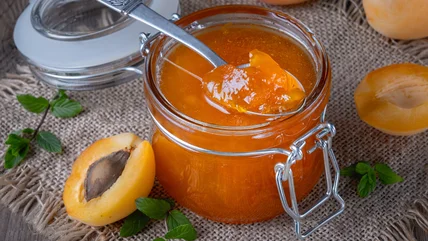
	<p>We chose four recipes that are representative of four common methods of preserving: whole fruit, sweet spreads, condiments, and pickles. Just select your produce and the type of preserves, and go from there.</p>


	<p>For additional inspiration, watch preserving authority <a href="/stories/10695">June Taylor</a> in our Obsessives video.</p>


</div>

<h3 class="emph a">Before You Start</h3>

	<p>We&#8217;re assuming that you already have basic tools lying around (like cutting boards, bowls, a zester, and measuring cups), so here&#8217;s the special equipment you&#8217;ll need:</p>


	<p><br /><div class="cols prep">
    <div class="col one">
        <div><div><img src="/assets/2007/08/jar.gif" alt="" /></div> Wide-mouth canning jars (number and size determined in the recipes)</div>
        <div><div><img src="/assets/2007/08/lids.gif" alt="" /></div> Lids with sealing compound for wide-mouth jars</div>
        <div><div><img src="/assets/2007/08/jar_bands.gif" alt="" /></div> Bands for wide-mouth jars</div>
    </div>
    <div class="col two">
        <div><div><img src="/assets/2007/08/large_pot.gif" alt="" /></div> Boiling water canner or 15- to 20-quart pot with a tightfitting lid</div>
        <div><div><img src="/assets/2007/08/canning_rack.gif" alt="" /></div> Canning rack that fits inside the boiling water canner or 15- to 20-quart pot</div>
        <div><div><img src="/assets/2007/08/spatula.gif" alt="" /></div> Thin, flexible rubber spatula</div>
    </div>
    <div class="col three">
        <div><div><img src="/assets/2007/08/jar_lifter.gif" alt="" /></div> Jar lifter</div>
        <div><div><img src="/assets/2007/08/thermometer.gif" alt="" /></div> Deep-frying/candy thermometer</div>
    </div>
</div></p>


<h3 class="emph b">Sanitizing the Jars, Lids, &#38; Bands</h3>

	<p><br /><div class="cols steps">
    <div class="col one">
        <div class="i"><img src="/assets/2007/08/sanitize_1.gif" alt="" /></div> <div class="text">Wash the jars, lids, and bands in hot, soapy water. Rinse them well. Dry the lids and bands, and set them aside.</div>
    </div>
    <div class="col two">
        <div class="i"><img src="/assets/2007/08/sanitize_3.gif" alt="" /></div> <div class="text">Place the jars in a boiling water canner or a 15- to 20-quart pot fitted with a canning rack and a lid. Fill the pot with water and bring it to a boil over medium-high heat. Boil for 10 minutes, then turn off the heat.</div>
    </div>
    <div class="col three">
        <div class="i"><img src="/assets/2007/08/sanitize_2.gif" alt="" /></div> <div class="text">Keep the jars in the hot water until you&#8217;re ready to use them, removing one at a time as needed.</div>
    </div>
</div><br /></p>


<h3 class="emph c">Four Different Methods to Pack and Process <span id="choose" style="display:none;">[ Choose a Scenario ]</span></h3>

<div id="scenarios">

<div id="rec0">

<p>[ Choose a Scenario ]<p>

<div class="scen1">
    <a href="#" onclick="goRecipe('0', '1', '1750'); return false">Scenario 1: <span>Whole Fruit Packed in Water</span></a>
    Example: <a class="example" href="/recipes/11044">Tomatoes Packed in Their Own Juices</a>
</div>

<div class="scen2">
    <a href="#" onclick="goRecipe('0', '2', '2000'); return false">Scenario 2: <span>Jam</span></a>
    Example: <a class="example" href="/recipes/11050">Fragrant Blueberry Jam</a>
</div>

<div class="scen3">
    <a href="#" onclick="goRecipe('0', '3', '1650'); return false">Scenario 3: <span>Chutney/Other Preserves</span></a>
    Example: <a class="example" href="/recipes/11048">Spicy Plum Chutney</a>
</div>

<div class="scen4">
    <a href="#" onclick="goRecipe('0', '4', '1850'); return false">Scenario 4: <span>Pickle</span></a>
    Example: <a class="example" href="/recipes/11049">Cocktail Onions</a>
</div>

</div>

<div id="rec1" style="display:none;">

    <div class="scen1">
        <a>Scenario 1: <span>Whole Fruit Packed in Water</span></a>
        <span>Example: <a class="example" href="/recipes/11044">Tomatoes Packed in Their Own Juices</a></span>
    </div>

    <div class="scen2">
        <a href="#" onclick="goRecipe('1', '2', '2000'); return false">Scenario 2: <span>Jam</span></a>
        Example: <a class="example" href="/recipes/11050">Fragrant Blueberry Jam</a>
    </div>

    <div class="scen3">
        <a href="#" onclick="goRecipe('1', '3', '1650'); return false">Scenario 3: <span>Chutney/Other Preserves</span></a>
        Example: <a class="example" href="/recipes/11048">Spicy Plum Chutney</a>
    </div>

    <div class="scen4">
        <a href="#" onclick="goRecipe('1', '4', '1850'); return false">Scenario 4: <span>Pickle</span></a>
        Example: <a class="example" href="/recipes/11049">Cocktail Onions</a>
    </div>

    <div class="grid">
        <div class="row one">
            <div class="col one"><div class="num"><div>1</div></div><div class="i"> </div> <div class="text"><p>Rinse the tomatoes and cut a shallow X shape just through the skin into the bottom of each.</p><div class="base"> </div></div></div>
            <div class="col two"><div class="num"><div>2</div></div><div class="i"> </div> <div class="text"><p>Fill a large pot (6 to 8 quarts) with water and bring to a boil over high heat. Prepare an ice water bath. Blanch the tomatoes in the boiling water until their skins loosen and start to pull back, about 30 to 60 seconds.</p><div class="base"> </div></div></div>
        </div>
        <div class="row two">
            <div class="col one"><div class="num"><div>3</div></div><div class="i"> </div> <div class="text"><p>Use a slotted spoon to transfer the tomatoes to the ice water bath, and reserve the blanching water.</p><div class="base"> </div></div></div>
            <div class="col two"><div class="num"><div>4</div></div><div class="i"> </div> <div class="text"><p>Peel the tomatoes, cut out the cores, and return the peeled tomatoes to the blanching water. Bring to a boil over medium-high heat; boil for 5 minutes.</p><div class="base"> </div></div></div>
            <div class="col three"><div class="num"><div>5</div></div><div class="i"> </div> <div class="text"></p>Once the tomatoes are cooked, remove the jars from the hot water using a jar lifter, letting the excess water drip off. Bring the water in the canner back to a simmer (about 180°F) for processing the packed jars.</p><div class="base"> </div></div></div>
        </div>
        <div class="row three">
            <div class="col one"><div class="num"><div>6</div></div><div class="i"> </div> <div class="text"><p>Add 1 tablespoon bottled lemon juice and 1 teaspoon kosher salt to each sanitized jar.</p><div class="base"> </div></div></div>
            <div class="col two"><div class="num"><div>7</div></div><div class="i"> </div> <div class="text"><p>Distribute the tomatoes and basil leaves among the jars, crushing the tomatoes if necessary to fit, leaving a 1/2-inch headspace.</p><div class="base"> </div></div></div>
            <div class="col three"><div class="num"><div>8</div></div><div class="i"> </div> <div class="text"><p>To remove any air bubbles, slide a clean rubber spatula down the side of each jar and press inward on the tomatoes while rotating the jar; repeat 3 to 4 times for each jar.</p><div class="base"> </div></div></div>
        </div>
    </div>
    <div class="proc">
    <h3 class="emph d">Processing the Packed Jars</h3>

    <br /><div class="cols4">
        <div class="col one">
            <div class="row one"><div class="i"><img src="/assets/2007/08/process_1.gif" alt="" /></div> <div class="text">Wipe the rim and threads of each jar with a clean, damp towel. Place the lids on the jars, checking that the sealing compound is centered. Fit the jars with bands and tighten just until resistance is met.</div></div>
            <div class="row two"><div class="i"><img src="/assets/2007/08/process_5.gif" alt="" /></div> <div class="text">Do not retighten the bands; let the jars cool at least 12 hours.</div></div>
        </div>
        <div class="col two">
            <div class="row one"><div class="i"><img src="/assets/2007/08/process_2.gif" alt="" /></div> <div class="text">Check that the water in the pot or boiling water canner is at a simmer (about 180°F), and set the jars in the canning rack. (The jars must be covered by 1 to 2 inches of water. Add additional boiling water as necessary.)</div></div>
            <div class="row two"><div class="i"><img src="/assets/2007/08/process_6.gif" alt="" /></div> <div class="text">After the jars have cooled, check for a seal by pressing the center of each lid. If the center is concave and does not flex, remove the band and try to lift off the lid with your fingertips (don&#8217;t pull too hard). If you cannot lift the lid, there is a good vacuum seal. If the lid pops off, your jar did not properly seal. Eat the preserves within the time indicated in the recipe.</div></div>
        </div>
        <div class="col three">
            <div class="row one"><div class="i"><img src="/assets/2007/08/process_3.gif" alt="" /></div> <div class="text">Cover the pot with a tightfitting lid and bring the water to a rolling boil over medium-high heat. Process the jars at a gentle but steady boil for the time indicated in each recipe. (Begin calculating the processing time once the water is at a rolling boil. Check occasionally that the water remains at a steady boil.)</div></div>
            <div class="row two"><div class="i"><img src="/assets/2007/08/process_7.gif" alt="" /></div> <div class="text">To store properly processed jars, wipe each lid and jar with a clean, damp cloth (the bands don&#8217;t need to stay on for storage); label the jars; and store them in a cool, dry, dark place. Unopened jars can be kept up to a year when stored properly. Once opened, keep them in the refrigerator and use them within the time indicated in each recipe.</div></div>
        </div>
        <div class="col four">
            <div class="row one"><div class="i"><img src="/assets/2007/08/process_4.gif" alt="" /></div> <div class="text">Once the jars are processed, remove them with a jar lifter and set them upright, 1 to 2 inches apart, on a dry towel.</div></div>
        </div>
    </div>
    <div class="bottom_links"><a href="/recipes/11044">Go To Recipe Page &gt;</a><br /><a href="/assets/2007/08/canning_wholefruit.pdf">Print Instructions &gt;</a></div>
</div>
</div>

<div id="rec2" style="display:none;">

    <div class="scen1">
        <a href="#" onclick="goRecipe('2', '1', '1750'); return false;">Scenario 1: <span>Whole Fruit Packed in Water</span></a>
        Example: <a class="example" href="/recipes/11044">Tomatoes Packed in Their Own Juices</a>
    </div>

    <div class="scen2">
        <a>Scenario 2: <span>Jam</span></a>
        <span>Example: <a class="example" href="/recipes/11050">Fragrant Blueberry Jam</a></span>
    </div>

    <div class="scen3">
        <a href="#" onclick="goRecipe('2', '3', '1650'); return false">Scenario 3: <span>Chutney/Other Preserves</span></a>
        Example: <a class="example" href="/recipes/11048">Spicy Plum Chutney</a>
    </div>

    <div class="scen4">
        <a href="#" onclick="goRecipe('2', '4', '1850'); return false">Scenario 4: <span>Pickle</span></a>
        Example: <a class="example" href="/recipes/11049">Cocktail Onions</a>
    </div>

    <div class="grid">
        <div class="row one">
            <div class="col one"><div class="num"><div>1</div></div><div class="i"> </div> <div class="text"><p>Place a plate in the freezer to chill for testing the jam.</p><div class="base"> </div></div></div>
            <div class="col two"><div class="num"><div>2</div></div><div class="i"> </div> <div class="text"><p>Place the blueberries in a large, heavy-bottomed saucepan and crush them with the back of a wooden spoon until some of the berries are broken up and they start to release their juice.</p><div class="base"> </div></div></div>
        </div>
        <div class="row two">
            <div class="col one"><div class="num"><div>3</div></div><div class="i"> </div> <div class="text"><p>Add the sugar and apple peel to the crushed berries and stir to combine. Bring the mixture to a boil over medium-high heat. Boil vigorously, stirring frequently, until the jam reaches its setting point, about 15 minutes. (Bubbles will rise to surface of the pan; if they get too high, just stir the jam until they decrease.)</p><div class="base"> </div></div></div>
            <div class="col two"><div class="num"><div>4</div></div><div class="i"> </div> <div class="text"><p>Once the jam reaches 228°F, start checking if it is properly set.</p><div class="base"> </div></div></div>
            <div class="col three"><div class="num"><div>5</div></div><div class="i"> </div> <div class="text"><p>To test if the jam is ready, put a spoonful on the chilled plate, and place it in the freezer until the jam reaches room temperature, about 1 minute. Draw your finger through the jam. If it immediately runs back together, it is not ready.</p><div class="base"> </div></div></div>
        </div>
        <div class="row three">
            <div class="col one"><div class="num"><div>6</div></div><div class="i"> </div> <div class="text"><p>Once the jam is ready, remove it from the heat and stir in the lemon juice.</p><div class="base"> </div></div></div>
            <div class="col two"><div class="num"><div>7</div></div><div class="i"> </div> <div class="text"><p>Remove the jars from the hot water with a jar lifter, letting the excess water drip off. Bring the water in the canner back to a simmer (about 180°F) for processing the packed jars.</p><div class="base"> </div></div></div>
            <div class="col three"><div class="num"><div>8</div></div><div class="i"> </div> <div class="text"><p>Fill the sterilized jars with jam, leaving a 1/4-inch headspace. (If you have a half-full jar, place it in the refrigerator and eat the jam within 5 days.)</p><div class="base"> </div></div></div>
        </div>
        <div class="row four">
            <div class="col one"><div class="num"><div>9</div></div><div class="i"> </div> <div class="text"><p>To remove any air bubbles, slide a clean rubber spatula down the side of each jar and press inward on the jam while rotating the jar; repeat 2 to 3 times for each jar.</p><div class="base"> </div></div></div>
        </div>
    </div>
    <div class="proc">
    <h3 class="emph d">Processing the Packed Jars</h3>

    <br /><div class="cols4">
        <div class="col one">
            <div class="row one"><div class="i"><img src="/assets/2007/08/process_1.gif" alt="" /></div> <div class="text">Wipe the rim and threads of each jar with a clean, damp towel. Place the lids on the jars, checking that the sealing compound is centered. Fit the jars with bands and tighten just until resistance is met.</div></div>
            <div class="row two"><div class="i"><img src="/assets/2007/08/process_5.gif" alt="" /></div> <div class="text">Do not retighten the bands; let the jars cool at least 12 hours.</div></div>
        </div>
        <div class="col two">
            <div class="row one"><div class="i"><img src="/assets/2007/08/process_2.gif" alt="" /></div> <div class="text">Check that the water in the pot or boiling water canner is at a simmer (about 180°F), and set the jars in the canning rack. (The jars must be covered by 1 to 2 inches of water. Add additional boiling water as necessary.)</div></div>
            <div class="row two"><div class="i"><img src="/assets/2007/08/process_6.gif" alt="" /></div> <div class="text">After the jars have cooled, check for a seal by pressing the center of each lid. If the center is concave and does not flex, remove the band and try to lift off the lid with your fingertips (don&#8217;t pull too hard). If you cannot lift the lid, there is a good vacuum seal. If the lid pops off, your jar did not properly seal. Eat the preserves within the time indicated in the recipe.</div></div>
        </div>
        <div class="col three">
            <div class="row one"><div class="i"><img src="/assets/2007/08/process_3.gif" alt="" /></div> <div class="text">Cover the pot with a tightfitting lid and bring the water to a rolling boil over medium-high heat. Process the jars at a gentle but steady boil for the time indicated in each recipe. (Begin calculating the processing time once the water is at a rolling boil. Check occasionally that the water remains at a steady boil.)</div></div>
            <div class="row two"><div class="i"><img src="/assets/2007/08/process_7.gif" alt="" /></div> <div class="text">To store properly processed jars, wipe each lid and jar with a clean, damp cloth (the bands don&#8217;t need to stay on for storage); label the jars; and store them in a cool, dry, dark place. Unopened jars can be kept up to a year when stored properly. Once opened, keep them in the refrigerator and use them within the time indicated in each recipe.</div></div>
        </div>
        <div class="col four">
            <div class="row one"><div class="i"><img src="/assets/2007/08/process_4.gif" alt="" /></div> <div class="text">Once the jars are processed, remove them with a jar lifter and set them upright, 1 to 2 inches apart, on a dry towel.</div></div>
        </div>
    </div>
        <div class="bottom_links"><a href="/recipes/11050">Go To Recipe Page &gt;</a><br /><a href="/assets/2007/08/canning_jam.pdf">Print Instructions &gt;</a></div>
</div>
</div>

<div id="rec3" style="display:none;">
    <div class="scen1">
        <a href="#" onclick="goRecipe('3', '1', '1750'); return false;">Scenario 1: <span>Whole Fruit Packed in Water</span></a>
        Example: <a class="example" href="/recipes/11044">Tomatoes Packed in Their Own Juices</a>
    </div>

    <div class="scen2">
        <a href="#" onclick="goRecipe('3', '2', '2000'); return false;">Scenario 2: <span>Jam</span></a>
        Example: <a class="example" href="/recipes/11050">Fragrant Blueberry Jam</a>
    </div>

    <div class="scen3">
        <a>Scenario 3: <span>Chutney/Other Preserves</span></a>
        <span>Example: <a class="example" href="/recipes/11048">Spicy Plum Chutney</a></span>
    </div>

    <div class="scen4">
        <a href="#" onclick="goRecipe('3', '4', '1850'); return false">Scenario 4: <span>Pickle</span></a>
        Example: <a class="example" href="/recipes/11049">Cocktail Onions</a>
    </div>

    <div class="grid">
        <div class="row one">
            <div class="col one"><div class="num"><div>1</div></div><div class="i"> </div> <div class="text"><p>Combine all ingredients in a medium saucepan and bring to a boil over medium heat.</p><div class="base"> </div></div></div>
            <div class="col two"><div class="num"><div>2</div></div><div class="i"> </div> <div class="text"><p>Let cook, stirring occasionally, about 30 minutes, or until the chutney is reduced by one-third.</p><div class="base"> </div></div></div>
        </div>
        <div class="row two">
            <div class="col one"><div class="num"><div>3</div></div><div class="i"> </div> <div class="text"><p>Continue cooking, stirring frequently to make sure it doesn&#8217;t burn, another 10 minutes until the chutney is syrupy.</p><div class="base"> </div></div></div>
            <div class="col two"><div class="num"><div>4</div></div><div class="i"> </div> <div class="text"><p>When the chutney is ready, remove the jars from the hot water with a jar lifter, letting the excess water drip off. Bring the water in the canner back to a simmer (about 180°F) for processing the packed jars.</p><div class="base"> </div></div></div>
            <div class="col three"><div class="num"><div>5</div></div><div class="i"> </div> <div class="text"><p>Remove the chutney from the heat, and fill the sterilized jars, leaving a 1/2-inch headspace.</p><div class="base"> </div></div></div>
        </div>
        <div class="row three">
            <div class="col one"><div class="num"><div>6</div></div><div class="i"> </div> <div class="text"><p>To remove any air bubbles, slide a clean rubber spatula down the side of each jar and press inward on the chutney while rotating the jar; repeat 2 to 3 times for each jar.</p><div class="base"> </div></div></div>
        </div>
    </div>
    <div class="proc">
    <h3 class="emph d">Processing the Packed Jars</h3>

    <br /><div class="cols4">
        <div class="col one">
            <div class="row one"><div class="i"><img src="/assets/2007/08/process_1.gif" alt="" /></div> <div class="text">Wipe the rim and threads of each jar with a clean, damp towel. Place the lids on the jars, checking that the sealing compound is centered. Fit the jars with bands and tighten just until resistance is met.</div></div>
            <div class="row two"><div class="i"><img src="/assets/2007/08/process_5.gif" alt="" /></div> <div class="text">Do not retighten the bands; let the jars cool at least 12 hours.</div></div>
        </div>
        <div class="col two">
            <div class="row one"><div class="i"><img src="/assets/2007/08/process_2.gif" alt="" /></div> <div class="text">Check that the water in the pot or boiling water canner is at a simmer (about 180°F), and set the jars in the canning rack. (The jars must be covered by 1 to 2 inches of water. Add additional boiling water as necessary.)</div></div>
            <div class="row two"><div class="i"><img src="/assets/2007/08/process_6.gif" alt="" /></div> <div class="text">After the jars have cooled, check for a seal by pressing the center of each lid. If the center is concave and does not flex, remove the band and try to lift off the lid with your fingertips (don&#8217;t pull too hard). If you cannot lift the lid, there is a good vacuum seal. If the lid pops off, your jar did not properly seal. Eat the preserves within the time indicated in the recipe.</div></div>
        </div>
        <div class="col three">
            <div class="row one"><div class="i"><img src="/assets/2007/08/process_3.gif" alt="" /></div> <div class="text">Cover the pot with a tightfitting lid and bring the water to a rolling boil over medium-high heat. Process the jars at a gentle but steady boil for the time indicated in each recipe. (Begin calculating the processing time once the water is at a rolling boil. Check occasionally that the water remains at a steady boil.)</div></div>
            <div class="row two"><div class="i"><img src="/assets/2007/08/process_7.gif" alt="" /></div> <div class="text">To store properly processed jars, wipe each lid and jar with a clean, damp cloth (the bands don&#8217;t need to stay on for storage); label the jars; and store them in a cool, dry, dark place. Unopened jars can be kept up to a year when stored properly. Once opened, keep them in the refrigerator and use them within the time indicated in each recipe.</div></div>
        </div>
        <div class="col four">
            <div class="row one"><div class="i"><img src="/assets/2007/08/process_4.gif" alt="" /></div> <div class="text">Once the jars are processed, remove them with a jar lifter and set them upright, 1 to 2 inches apart, on a dry towel.</div></div>
        </div>
    </div>
        <div class="bottom_links"><a href="/recipes/11048">Go To Recipe Page &gt;</a><br /><a href="/assets/2007/08/canning_chutney.pdf">Print Instructions &gt;</a></div>
</div>

</div>

<div id="rec4" style="display:none;">

    <div class="scen1">
        <a href="#" onclick="goRecipe('4', '1', '1750'); return false;">Scenario 1: <span>Whole Fruit Packed in Water</span></a>
        Example: <a class="example" href="/recipes/11044">Tomatoes Packed in Their Own Juices</a>
    </div>

    <div class="scen2">
        <a href="#" onclick="goRecipe('4', '2', '2000'); return false;">Scenario 2: <span>Jam</span></a>
        Example: <a class="example" href="/recipes/11050">Fragrant Blueberry Jam</a>
    </div>

    <div class="scen3">
        <a href="#" onclick="goRecipe('4', '3', '1650'); return false;">Scenario 3: <span>Chutney/Other Preserves</span></a>
        Example: <a class="example" href="/recipes/11048">Spicy Plum Chutney</a>
    </div>

    <div class="scen4">
        <a>Scenario 4: <span>Pickle</span></a>
        <span>Example: <a class="example" href="/recipes/11049">Cocktail Onions</a></span>
    </div>

    <div class="grid">
        <div class="row one">
            <div class="col one"><div class="num"><div>1</div></div><div class="i"> </div> <div class="text"><p>Place the salt in a large nonreactive heat-resistant container and cover with water. Add enough ice to equal 1 gallon total brining liquid.</p><div class="base"> </div></div></div>
            <div class="col two"><div class="num"><div>2</div></div><div class="i"> </div> <div class="text"><p>Stir to dissolve the salt; add the onions. Keep the onions submerged by covering them with a plastic resealable bag filled with water.</p><div class="base"> </div></div></div>
        </div>
        <div class="row two">
            <div class="col one"><div class="num"><div>3</div></div><div class="i"> </div> <div class="text"><p>Refrigerate and let the onions brine for 12 to 24 hours.</p><div class="base"> </div></div></div>
            <div class="col two"><div class="num"><div>4</div></div><div class="i"> </div> <div class="text"><p>Strain the onions and rinse them.</p><div class="base"> </div></div></div>
            <div class="col three"><div class="num"><div>5</div></div><div class="i"> </div> <div class="text"><p>Bring the sugar, mustard seeds, vinegar, and red chile flakes to a boil over medium heat and whisk to combine.</p><div class="base"> </div></div></div>
         </div>
        <div class="row three">
            <div class="col one"><div class="num"><div>6</div></div><div class="i"> </div> <div class="text"><p>Simmer until the sugar is dissolved. Keep the pickling liquid hot while packing the jars, but do not let it boil.</p><div class="base"> </div></div></div>
            <div class="col two"><div class="num"><div>7</div></div><div class="i"> </div> <div class="text"><p>Remove the jars from the hot water with a jar lifter, letting the excess water drip off. Bring the water in the canner back to a simmer (about 180°F) for processing the packed jars.</p><div class="base"> </div></div></div>
            <div class="col three"><div class="num"><div>8</div></div><div class="i"> </div> <div class="text"><p>Distribute the onions and bay leaves among the sterilized jars, leaving a 1-inch headspace.</p><div class="base"> </div></div></div>
        </div>
        <div class="row four">
            <div class="col one"><div class="num"><div>9</div></div><div class="i"> </div> <div class="text"><p>Cover the onions with the hot pickling liquid, leaving a 1/2-inch headspace. (If there is leftover pickling liquid, it can be used for a quick pickle. To do so, fill a clean jar with peeled onions, cover them with the pickling liquid, and refrigerate for 12 to 24 hours before eating. Eat within 2 weeks.)</p><div class="base"> </div></div></div>
            <div class="col two"><div class="num"><div>10</div></div><div class="i"> </div> <div class="text"><p>To remove any air bubbles, slide a clean rubber spatula down the side of each jar and press inward on the onions while rotating the jar; repeat 5 to 6 times for each jar.</p><div class="base"> </div></div></div>
        </div>
    </div>
    <div class="proc">
    <h3 class="emph d">Processing the Packed Jars</h3>

    <br /><div class="cols4">
        <div class="col one">
            <div class="row one"><div class="i"><img src="/assets/2007/08/process_1.gif" alt="" /></div> <div class="text">Wipe the rim and threads of each jar with a clean, damp towel. Place the lids on the jars, checking that the sealing compound is centered. Fit the jars with bands and tighten just until resistance is met.</div></div>
            <div class="row two"><div class="i"><img src="/assets/2007/08/process_5.gif" alt="" /></div> <div class="text">Do not retighten the bands; let the jars cool at least 12 hours.</div></div>
        </div>
        <div class="col two">
            <div class="row one"><div class="i"><img src="/assets/2007/08/process_2.gif" alt="" /></div> <div class="text">Check that the water in the pot or boiling water canner is at a simmer (about 180°F), and set the jars in the canning rack. (The jars must be covered by 1 to 2 inches of water. Add additional boiling water as necessary.)</div></div>
            <div class="row two"><div class="i"><img src="/assets/2007/08/process_6.gif" alt="" /></div> <div class="text">After the jars have cooled, check for a seal by pressing the center of each lid. If the center is concave and does not flex, remove the band and try to lift off the lid with your fingertips (don&#8217;t pull too hard). If you cannot lift the lid, there is a good vacuum seal. If the lid pops off, your jar did not properly seal. Eat the preserves within the time indicated in the recipe.</div></div>
        </div>
        <div class="col three">
            <div class="row one"><div class="i"><img src="/assets/2007/08/process_3.gif" alt="" /></div> <div class="text">Cover the pot with a tightfitting lid and bring the water to a rolling boil over medium-high heat. Process the jars at a gentle but steady boil for the time indicated in each recipe. (Begin calculating the processing time once the water is at a rolling boil. Check occasionally that the water remains at a steady boil.)</div></div>
            <div class="row two"><div class="i"><img src="/assets/2007/08/process_7.gif" alt="" /></div> <div class="text">To store properly processed jars, wipe each lid and jar with a clean, damp cloth (the bands don&#8217;t need to stay on for storage); label the jars; and store them in a cool, dry, dark place. Unopened jars can be kept up to a year when stored properly. Once opened, keep them in the refrigerator and use them within the time indicated in each recipe.</div></div>
        </div>
        <div class="col four">
            <div class="row one"><div class="i"><img src="/assets/2007/08/process_4.gif" alt="" /></div> <div class="text">Once the jars are processed, remove them with a jar lifter and set them upright, 1 to 2 inches apart, on a dry towel.</div></div>
        </div>
    </div>
        <div class="bottom_links"><a href="/recipes/11049">Go To Recipe Page &gt;</a><br /><a href="/assets/2007/08/canning_pickle.pdf">Print Instructions &gt;</a></div>
</div>
</div>
</div>

</div>

	<p><br />
<em>Illustrations by Bryan Christie</em></p>]]>
      </content>
    </page>
  </pages>
  <tags>
    <tag>
      <id>1253</id>
      <name>canning</name>
    </tag>
    <tag>
      <id>3443</id>
      <name>preserving</name>
    </tag>
    <tag>
      <id>9431</id>
      <name>boiling water method</name>
    </tag>
    <tag>
      <id>368</id>
      <name>fruit</name>
    </tag>
    <tag>
      <id>467</id>
      <name>tomatoes</name>
    </tag>
    <tag>
      <id>9432</id>
      <name>high acid foods</name>
    </tag>
    <tag>
      <id>6132</id>
      <name>preserves</name>
    </tag>
    <tag>
      <id>9433</id>
      <name>whole fruit</name>
    </tag>
    <tag>
      <id>9434</id>
      <name>sweet spreads</name>
    </tag>
    <tag>
      <id>7127</id>
      <name>condiments</name>
    </tag>
    <tag>
      <id>888</id>
      <name>pickles</name>
    </tag>
  </tags>
</item>