<?xml version="1.0" encoding="UTF-8"?>
<item>
  <id>10370</id>
  <title>Greens Goddess</title>
  <published_at>Fri Dec 08 14:22:00 -0800 2006</published_at>
  <link>http://www.chow.com/stories/10370</link>
  <pubDate>Fri, 08 Dec 2006 22:22:00 GMT</pubDate>
  <short_description>Cookbook author Deborah Madison spills the beans with CHOW</short_description>
  <long_description>Cookbook author Deborah Madison spills the beans with CHOW.</long_description>
  <img>http://www.chow.com/assets/2006/12/deborahm_240x240.jpg</img>
  <author>Helena Echlin</author>
  <category>
    <id>77</id>
    <name>Q&amp;A</name>
  </category>
  <pages>
    <page>
      <page_number>1</page_number>
      <content>
        <![CDATA[<p><span class="dropcap">D</span>aughter of a botany professor at the <a href="http://www.ucdavis.edu/index.html">University of California at Davis</a>, Deborah Madison spent her earliest years on a dairy farm in upstate New York. She began cooking vegetarian as a student at the <a href="http://sfzc.org/">San Francisco Zen Center</a> in the late 1960s and went on to open the famous vegetarian restaurant <a href="http://www.greensrestaurant.com/">Greens</a> in 1979. Her first cookbook (with Edward Espe Brown) was <a href="http://www.amazon.com/Greens-Cookbook-Extraordinary-Vegetarian-Cuisine/dp/0553505246/sr=8-3/qid=1165521078/ref=sr_1_3/103-3936792-6422227?ie=UTF8&#38;s=books"><em>The Greens Cookbook: Extraordinary Vegetarian Cuisine</em></a> (Bantam Books, 1987). Among her other books are the best-selling <a href="http://www.amazon.com/Vegetarian-Cooking-Everyone-Deborah-Madison/dp/0767900146/sr=1-1/qid=1165539855/ref=pd_bbs_sr_1/002-2951520-2305603?ie=UTF8&#38;s=books"><em>Vegetarian Cooking for Everyone</em></a> (Broadway, 1997) and <a href="http://www.amazon.com/Vegetable-Soups-Deborah-Madisons-Kitchen/dp/076791628X/sr=1-1/qid=1165521165/ref=pd_bbs_sr_1/103-3936792-6422227?ie=UTF8&#38;s=books"><em>Vegetable Soups from Deborah Madison&#8217;s Kitchen</em></a> (Broadway, 2006). Her books have twice been awarded the <a href="http://www.iacp.com/">IACP</a> Cookbook of the Year award, she is the recipient of four <a href="http://www.jamesbeard.org/">James Beard awards</a>, and she appears in Who&#8217;s Who in American Food and Wine (2005). Madison lives in <a href="http://www.city-data.com/city/Galisteo-New-Mexico.html">Galisteo, New Mexico</a>.</p>


	<p><strong>What was the food like when you were a student at the Zen Center?</strong></p>


	<p>Very spartan and strange, with a strong macrobiotic twist. People were rebelling against TV dinners, but they didn&#8217;t know how to cook well. We ate a fair amount of <a href="http://www.chow.com/recipes/10065">tofu</a>, because it&#8217;s a good source of protein and easy to prepare. When I began working in the kitchen there, I saw that if we were to eat together, I&#8217;d have to make vegetarian food more familiar and appealing.</p>


	<blockquote>
		<p class="pullquote">I feel physically a lot better if I have some meat.</p>
	</blockquote>


	<p><strong>Why aren&#8217;t you vegetarian?</strong></p>


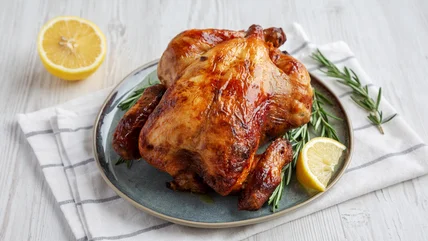
	<p>I feel physically a lot better if I have some meat. I was sickly for a long time. I&#8217;ve never been a rigid vegetarian. I care about how food is grown and raised more than anything else. I don&#8217;t go to the supermarket and buy industrial meat. But a friend of mine raises incredible chickens, and we <a href="http://www.chow.com/recipes/10181">have one</a> once in a while and I make stock. Everything gets used, and it makes my <a href="http://www.chow.com/recipes/10385">soup</a> a lot tastier. Being part of the local food chain in the West means eating beef, supporting ranchers who are doing it right&#8212;not those with the slaughterhouse-feedlot mentality. It&#8217;s always very difficult to realize something will die and suffer on your behalf. But things suffer for all kinds of reasons, not just food.</p>


	<p><strong>How did you start writing cookbooks?</strong></p>


	<p>I was invited to write <em>The Greens Cookbook</em>. And I really felt the job was to reflect the food we made at Greens&#8212;restaurant food that is more complicated than the food you make at home. I was really trying to invent a new vegetarian cuisine, to take it away from poorly cooked stodgy brown grain-centered dishes to food that is bright, sophisticated, delicious, and pretty.</p>


	<p>Then I went around the country on a big book tour in 1986, and I realized all of the foods we&#8217;re used to having in San Francisco you couldn&#8217;t get anywhere. Fennel and celery root were unheard of. And <a href="http://www.chow.com/recipes/10666">arugula</a>? Forget it. Then I moved to <a href="http://www.flagstaff.az.gov/">Flagstaff, Arizona</a>, a small town where people had families and children and not a lot of time to cook. And they weren&#8217;t food-obsessed like in San Francisco. So when it came to writing my next book, <a href="http://www.amazon.com/Savory-Way-Deborah-Madison/dp/0767901665/sr=8-1/qid=1165521530/ref=pd_bbs_sr_1/103-3936792-6422227?ie=UTF8&#38;s=books"><em>The Savory Way</em></a> (Bantam, 1990, reissue edition), I wanted to write a book with more down-to-earth recipes, that didn&#8217;t take so much time and that used limited ingredients. Every ingredient in that book, even rosewater, I was able to find where I lived.</p>


	<p><strong><em>The Savory Way</em> has a Middle Eastern influence. Where did that come from?</strong></p>


	<p>When I was in Arizona, I met someone who had been living in Turkey and she cooked dishes for me. I loved those flavors so much, those of all of the Middle East really: yogurt and dill and cumin and things that sizzle, and the use of legumes. The cuisines of the eastern Mediterranean really have a lot of interesting flavors and textures. Also a Lebanese man opened up a market and restaurant in my town, and I was able to go eat Lebanese food all the time.</p>


	<p><strong>What inspired your book <em>Vegetarian Cooking for Everyone</em>?</strong></p>


	<p>I was teaching a weeklong class in vegetarian cooking at the <a href="http://www.esalen.org/">Esalen Institute</a> in California, a really basic class&#8212;bread, salad dressing, pasta, gratins. As I was driving home, I was thinking, it&#8217;s really too bad there is no <a href="http://www.amazon.com/Joy-Cooking-75th-Anniversary-2006/dp/0743246268/sr=1-1/qid=1165521621/ref=pd_bbs_sr_1/103-3936792-6422227?ie=UTF8&#38;s=books"><em>Joy of Cooking</em></a> for vegetarians. At that time, if you were interested in, say, soy, you had to make do with a pamphlet in the health-food store. The title of the book was intended to convey that this is not a political tract, just a book about good food anyone can enjoy&#8212;it just happens to be without meat.</p>


	<p><strong>Is there a recipe of yours that people say is their favorite?</strong></p>


	<p>Yes, the black bean chili from <em>The Greens Cookbook</em>. That is used and copied a lot. I&#8217;ve seen the recipe appear in restaurants. That was very exciting then because smoky chipotle was a brand-new ingredient when I opened Greens; it was not everywhere in supermarkets like it is now.</p>


	<p><strong>Do you feel your cookbooks have dated in any way?</strong></p>


	<p>Yes, photos get dated really fast. And there are recipes in <em>The Greens Cookbook</em> that I look back on and wonder why I made certain choices&#8212;for example, why I used two vinegars together. In the &#8216;80s at Greens, we cooked much more richly. Vegetarian cooks were excited to discover reduced cream sauces after all the spartan food they&#8217;d been eating. People nowadays aren&#8217;t looking for reduced cream. Those recipes are good, but I&#8217;m not sure that&#8217;s how we cook these days.</p>


	<p><strong>As the author of a book on tofu, what dishes do you recommend to convert tofu haters?</strong></p>


	<p>Something where it&#8217;s disguised a little bit. In <a href="http://www.amazon.com/This-Cant-Tofu-Something-Would/dp/0767904192/sr=8-1/qid=1165522368/ref=pd_bbs_sr_1/104-1144899-4127109?ie=UTF8&#38;s=books"><em>This Can&#8217;t Be Tofu!</em></a> (Broadway, 2000), there&#8217;s a recipe where the tofu is finely diced and mixed with mushrooms as a tortellini filling. Or you can combine the tofu with something people are used to eating, like shrimp. Some people have a hard time with the texture of tofu. But they may like it if you slice it thin and jazz it up with a coating of breadcrumbs or Parmesan or both.</p>


	<p><strong>I think one of the things <a href="/stories/10125">vegetarians miss most is bacon</a>. I know you dislike fake bacon, so what ingredients can vegetarians substitute to get that smoky flavor?</strong></p>


	<p><a href="http://www.chow.com/ingredients/277">Chipotles</a> offer a smoky flavor, but then you also get the heat. Spanish smoked paprika, the sweet kind, doesn&#8217;t have that heat. I have a dish&#8212;eggs over smoky potatoes&#8212;in my book <a href="http://www.amazon.com/Vegetarian-Suppers-Deborah-Madisons-Kitchen/dp/0767916271/sr=1-1/qid=1165521931/ref=sr_1_1/103-3936792-6422227?ie=UTF8&#38;s=books"><em>Vegetarian Suppers</em></a> (Broadway, 2005) that uses smoked paprika and is very good. Some farmers make <a href="http://www.boggycreekfarm.com/pages/larrys-smoke-dried-tomatoes.php">smoked dried tomatoes</a>.</p>


	<p><strong>What cookbooks do you recommend?</strong></p>


	<p>I love <a href="http://www.amazon.com/Spice-Flavors-Mediterranean-Ana-Sortun/dp/0060792280/sr=1-1/qid=1165521832/ref=pd_bbs_sr_1/103-3936792-6422227?ie=UTF8&#38;s=books"><em>Spice: Flavors of the Eastern Mediterranean</em></a>, by Ana Sortun (Regan Books, 2006). I haven&#8217;t bought cookbooks for a long time. Let me see. <a href="http://www.amazon.com/Zuni-Cafe-Cookbook-Compendium-Franciscos/dp/0393020436/sr=1-1/qid=1165522158/ref=sr_1_1/103-3936792-6422227?ie=UTF8&#38;s=books"><em>The Zuni Cafe Cookbook</em></a> (by Judy Rodgers; W. W. Norton, 2002)&#8212;Judy is an amazing cook. Any <a href="http://www.amazon.com/s/ref=nb_ss_b/103-8089538-4739008?url=search-alias%3Dstripbooks&#38;field-keywords=clifford+wright&#38;Go.x=0&#38;Go.y=0&#38;Go=Go">books by Clifford Wright</a>. I also like <a href="http://www.amazon.com/Splendid-Table-Emilia-Romagna-Heartland-Northern/dp/0688089631/sr=1-1/qid=1165522231/ref=pd_bbs_sr_1/103-3936792-6422227?ie=UTF8&#38;s=books"><em>The Splendid Table</em></a>, by Lynne Rossetto Kasper (Morrow Cookbooks, 1992). I find her recipes constantly interesting and a little bit surprising and very authentic. She has a salad with slivered apples and sorrel and basil. So surprising. I wouldn&#8217;t think to put those things together. But it really works and is delicious.</p>


	<p><strong>What would your last meal be?</strong></p>


	<p>I&#8217;m not sure, but it would definitely include a really good burgundy. And some quince&#8212;maybe a cream tart with <a href="http://www.chow.com/ingredients/22">quince</a> for dessert.</p>


	<p><strong>What is your next book about?</strong></p>


	<p>It&#8217;s a book of desserts&#8212;really unfussy desserts, with a big emphasis on fruit.</p>


	<p><em>Photograph of Deborah Madison by Patrick McFarlin</em></p>]]>
      </content>
    </page>
  </pages>
  <tags>
    <tag>
      <id>435</id>
      <name>vegetarian</name>
    </tag>
    <tag>
      <id>762</id>
      <name>chef</name>
    </tag>
    <tag>
      <id>40</id>
      <name>greens</name>
    </tag>
  </tags>
</item>