Browsing on your mobile phone? Take a look at our mobile edition »

Save to My Chow Print

Feature

Sweet, Sour, Salty, What?

The return of bitter to the American palate

By Lessley Anderson

This story won a 2007 IACP Bert Greene Journalism Award.

T he odd pairing of zucchini and grapefruit is featured on the menu of New York City restaurant wd-50, with noodlelike strips of squid and a smear of sour cream. And get this —the zucchini is raw and the grapefruit is dehydrated.

Why? They’re more bitter that way. “Raw zucchini is more bitter than cooked zucchini,” says chef Wylie Dufresne. When you dry grapefruit, “the flavors become more concentrated.”

Not the usual way of thinking about those flavors. And yet more American chefs are bringing bitter into their menus, playing with the taste in bold ways. Pino Maffeo of Boston’s Restaurant L grates intensely bitter, black dried dandelion root over lobster. Pastry chef Ben Roche of Chicago’s Moto restaurant spikes coffee ice cream with a chemical compound that’s sometimes used in cleaning solutions to stop people from accidentally drinking them.

Before you assume these are dishes destined for the graveyard of failed experiments, know this: Customers love them. “When they see [dandelion root] on the menu, I think their eye just skips to the next word,” says Maffeo. “But then they eat it, and go, ‘Holy cannoli, what is this?’”

It’s a major shift in American taste. We’ve historically preferred foods that are salty and sweet (extra points for fatty) and, unlike most other cultures, shied away from bitter things. Think of Italians and Campari, or the Chinese and bitter melon. Yet in the recent past, American chefs were afraid even to breathe the “b” word for fear a dish wouldn’t sell.

Pastry chef Ben Roche spikes coffee ice cream with a chemical compound used in cleaning solutions to stop people from accidentally drinking them.

“What are you going to say when you describe something like an artichoke?” asks Dufresne. “That it’s bitter and metallic tasting? The average-Joe diner isn’t going to say, ‘Oh yeah, I’ll take two of those!’”

The signs are everywhere. Curls of bitter radicchio have gone from rarefied plates 20 years ago at Da Silvano to the menu boards of McDonald’s. There’s a Starbucks on every urban block selling espresso to people who ten years ago pronounced it “expresso.” Remember when practically all our chocolate was milk, except for Hershey’s Special Dark? Now the more-bitter dark is the fastest-growing segment of the American chocolate market, with ultra-dark varieties containing upwards of 80 percent cacao selling briskly. The trend was so overwhelming that it spurred Hershey’s to acquire boutique dark-chocolate-maker Scharffen Berger two summers ago.

Likewise bitter beers. Microbrews are gaining market share faster than less bitter mass-market lagers like Budweiser and Miller. The biggest category of entries at the Great American Beer Festival, the largest competition for commercial craft brewers in the country, is now India Pale Ales, or IPAs. These bitter beers typically have between 40 and 60 IBUs (International Bitterness Units, the measure of how much isomerized alpha acid a beer contains). Budweiser has about 10.

The country that invented American cheese, the Frappuccino, Jell-O, and Wonder Bread is finally discovering its dark side.

An evolutionary start

Until fairly recently, scientists believed we tasted things in different areas of our tongue. According to this “tongue map,” bitter was experienced at the back. Although the tongue-map theory has been debunked (we use our whole tongue to taste everything), it’s still believed to be true that bitter, along with sweet, salty, sour, and umami, the Japanese word that translates, roughly, to “meaty,” are the only tastes that humans can detect. All other flavors are experienced primarily through aroma.

Bitter in the Kitchen

Here are some recipes that exemplify the use of bitter flavors.

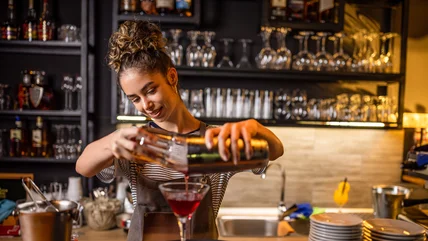
Negroni
Start with this classic Campari cocktail and bitter will never seem bad again.

Fennel, Parsley, and Celery Salad with Preserved Lemon-Bitters Dressing
This is a new way to use Angostura Bitters outside the realm of cocktails. The combination of tastes in this dish—lemons, olives, the slightly sweet, anise flavor of fennel, plus the zing of the bitters—is complex and uncommon. It’s probably the most palate-testing recipe of the bunch.

Baked Pasta with Radicchio and Mozzarella
This recipe combines flavors that you already know with a slight sweet-bitter edge.

Saffron Panna Cotta with Bitter Honey
In this creamy dessert, depth comes from the slightly unexpected addition of bitter honey and saffron. But neither will overwhelm the dish, it’s nicely balanced.

We all hate bitter at first. Feed babies something bitter, and they’ll reflexively recoil no matter what culture they’re from, says Dr. Paul Breslin of the Philadelphia-based Monell Chemical Senses Center, which conducts research on the senses. Scientists believe this was once an evolutionary advantage that warned us away from eating plants containing bitter, poisonous alkaloids.

So bitterness is an acquired taste. But why do some acquire it, and others not? There’s no easy answer. In both Chinese and Indian traditional medicines, bitter foods are believed to be medicinal. This makes sense, as bitter foods like kale are often healthful, and strangely enough, even poisonous plants can be good for you. Foxglove, for instance, contains the poison digitalis, which is lethal in a large dose but heart medicine in a smaller dose.

This would explain the popularity of herbal aperitifs and digestifs in Italy. Originally, these liqueurs were created as health tonics. People associated them with feeling better (whether they actually worked or not) and in the process took a liking to them.

Others may warm up to bitter things because they really make one feel better. Think beer, chocolate, coffee, red wine, coca leaves —all bitter. “Straight black coffee just doesn’t taste that good,” says Breslin. “So what is it that makes people go from drinking their coffee with lots of milk and sugar in it, the way you do when you’re a young person, to drinking it black? It might be that they associate it with, basically, getting high.”

In and out of favor

Americans weren’t always averse to the taste. Around the time of the Revolutionary War, pubs routinely served a strong English beer called bitter. Many turn-of-the-century patent medicines evolved into bitter-flavored soda pop, notes James Trager, author of The Food Chronology: A Food Lover’s Compendium of Events and Anecdotes, from Prehistory to the Present (Owl Books, 1997). Moxie, which gets its flavor from bitter gentian root, was originally marketed as a cure for dementia and impotence. It evolved, briefly, into the most popular pop in the country (you can still find it, if you’re lucky). Coca-Cola, too, originally had medicinal claims and bitter notes.

A taste for bitter persisted, mostly in isolated pockets of immigrants, throughout the 20th century. (Chef Andrew Carmellini of New York City’s A Voce restaurant remembers his male relatives in Ohio chugging bottles of vermouth, dubbed by some at the time as “Italian mouthwash.”) However, for the most part, the American palate began to dull. Industrialized food production began in earnest during World War II. Regional cuisines were eroded or replaced by canned and processed foods.

“Food became bland, salty, overcooked,” says Amy Bentley, professor of Nutrition, Food Studies and Public Health at New York University. “Think ‘fruit cocktail.’” The longer you cook vegetables, the less bitter they are.

Chef Andrew Carmellini remembers his relatives chugging bottles of vermouth, dubbed “Italian mouthwash.”

A new palate expansion

Now we’re in the midst of a full-scale fruit cocktail backlash. Thank people like Alice Waters for promoting fresh, seasonal produce and local ingredients over canned and frozen. And thank the cultural shifts and affluence that have allowed Americans to travel the world and taste other cultures’ food. Also thank the recent waves of immigrants from Latin America and Southeast Asia who have introduced new foods to the States. Mainstream Americans, more and more, are looking for thrills and complexity in what they eat.

“Americans are finding more satisfaction, and a more hedonistic response to food, like the French,” says John Scharffenberger, cofounder of Scharffen Berger Chocolate. “They’re eating more intensely flavored foods,” like stinky cheeses, red wine, wheat bread, olives, curry, and chiles.

“Bitter being an equal part of a very small flavor perception, if you leave out essentially 25 percent of that, you are leaving out a huge range of flavors available to you,” says John Zearfoss, a professor at the Culinary Institute of America who has studied the unpopular taste.

In the company of other flavors

Here’s one thing every cook should understand: Bitter doesn’t like to be alone. Take mustard greens. On their own, they’re very bitter. But when made Southern style, they’re salted and stewed with pork to impart sweetness, then served with a side of sour lemon, lime, or pepper vinegar. The end result is savory, with a touch of bitter and a little sweet to balance.

Chefs who play with bitter understand this approach. “You kind of have to slip bitter in as a side note,” says Moto pastry chef Ben Roche. “It’s not a necessary part of the dish, but it kind of makes the dish.” He balances his coffee ice cream with sweet milk chocolate pudding and poached dates. Dufresne of wd-50 uses sour cream as a fatty, creamy balm to the bitterness of his grapefruit and zucchini, with brininess from the squid as an alternate foil.

David Myers, chef at Los Angeles’s Sona restaurant, marinates green papaya in bitters, then serves it with grilled lobster (sweet) and cooling cucumbers. Using bitters in a short rib braise “adds a punch,” says Myers, but they’re softened with tangy mustard, red wine, and tomatoes. Ron Mendoza, pastry sous chef at French Laundry, makes a bitter chocolate terrine paired with candied lemon peel (sour) and extra-sweet ice cream.

A fine balance

In some cases, finding the bitter balance is knowing when to pull back and when to be patient. “Bitter peaks throughout your meal are nice,” says Dufresne of wd-50. “I love the way you can use bitterness in the mouth to stimulate the palate and get people salivating and excited.”

Rick Bayless of Chicago’s Frontera Grill makes a sauce from dried guajillo chiles that’s sweet, salty, tangy, and bitter all at once. He coaxes this complexity by slow-cooking them with cumin, garlic, and black pepper. “A lot of cooks will try to make a 15-minute guajillo sauce, and all they get is the bitterness,” says Bayless.

“I love the way you can use bitterness in the mouth to stimulate the palate and get people salivating and excited,” says Chef Wylie Dufresne.

If you’ve acclimated your audience to these subtle bitter notes, you may be ready to go hard-core. Abhijit Saha, executive chef at the Park Hotel in Bangalore, India, recommends a bitter melon dish called bharwan karela. Peel a gourd, salt to drain bitterness in the way you would eggplant, and hollow out the center. Cook the seeds with onion; Indian pickling spices like fennel, nigella, fenugreek, and mustard seeds; and turmeric, chili, cumin, and coriander powders. Parboil the casing, put the cooked filling back inside, truss, fry in a small amount of oil, and sprinkle with chaat masala, a little lemon juice, and salt.

“Eighty percent of the bitterness will be reduced, and the remaining flavors come through, [tasting] artichoke-y or asparagus-y,” assures Saha.

On second thought, we Americans might want to stay in the shallow end for now. Somebody recently took bharwan karela to the Frontera Grill staff party.

“Cooks typically love all flavors, and we love things that are pretty far out there,” says Bayless. “But that bitter melon —oh my God was it bitter!”

Lessley Anderson is senior editor at CHOW.

Comments

just to tack on to the evolutionary component - as omnivores, we're fending off poisoning with our senses and our body is conditioned to react a certain way when it thinks it is tasting something threatening, in this case bitterness. so, when we taste bitterness all these great feeling chemicals fire away in our brains battling off potential pain and we really do get a bit high.

so great to hear that the drowning of our food in sugar and salt might be on the way out. whenever i read about trends like this i wonder if this kind of thing is happening at ralph's and safeway instead of just amongst top tier chefs. i guess they've got radicchio at mcdonald's now, but still, is the non-chow reading american really gravitating towards bitterness? i'd like to believe in this revolution and the US of Arugula, but last time i checked more and more people still were getting fat as hell eating fast food all the time.

The tongue map? You can't be serious (or expect us to take you seriously either)? The myth of the tonge map has been disproved so many times, even a simple Google search does the trick. Try putting salt on the tip of your tongue, or sugar on the back of your tongue.

Meangreenbeans - read the story.

that is a pretty unhealthy tongue in the picture. not at all pleasant to look at.

As might be obvious, bitter gourd (Philippines, Laos, Vietnam) is highly underrated. Stuff with ground pork, spices, herbs yatta, yatta, yatta, and steam. Serve with soy-lime-chili-chives sort of sauce. Can't go wrong.

The reminds me of reading and writing about Umami (the fifth taste)
http://www.sergetheconcierge.com/2006...

I still get amazed how some american palates have a hard time dealing with for strong flavors for example in cheese.

Here in the US (in Restaurants) we also tend to pile up too many ingredients in a single dish. It makes it busy and sometimes harder to taste.

My impressions

SERGE
Biz:
http://www.njconcierges.com
Blog:
http://www.sergetheconcierge.com

the tongue map is so out of date scientifically that some of the premises are silly.

"American palate"? please. This generalization is akin to saying all Americans drive SUV's and live in mansions. Just because we live in the USA doesn't mean our tongues are defective. Nor is our appreciation of good food.
Are all French people able to taste food better. All of them?
Really.

guys - they say that the tongue map is not true - read the story

there are also the tastes of spiciness (capsicum), coolness (menthol/mint), numbness (sichuan peppers), and astringency (sumac - middle eastern spice, and other foods)

Also, there is strong evidence that we can taste fat too. They found fat-detectors on the tongues of mice. And you look at any foods and it's amazing how much a difference some fat makes, which can't be explained by "mouthfeel" or consistency. For example, low-fat peanut butter is about as viscous as regular peanut butter, but regular tastes SO much better (to most people most of the time, anyway)

I find that there is no way that we don't have fat taste receptors. Anyone here agree?

Also, I bet we can taste certain pigment compounds, such as carotenoids or anthocyanins - maybe. But the fat thing is definite in my mind from my experience with food/cooking, plus it evolutionarily makes sense.

I would love to be able to jump onto the "bitter bandwagon". Unfortunately, I'm one of "those people" who, after trying numerous varieties of dark chocolate, still gags at even the smell of it.

I love coffee with only 1/2 & 1/2, and I do love broccoli and such, but it took years to develop those tastes. I was introduced to them as a child, so I guess that helped.

So, does anyone have any advice for the "supertaster"? The person who has many more tastebuds than the average bear and who will be overwhelmed at anything too sweet or salty (or bitter especially). Of course bitter stuff (even a slight bitterness) is revolting to us, even when we want to expand our palates. It makes it hard to go to dinner with others because of their constant ridicule, and it keeps us from branching out, even when we do it with an open mind.

That paper that they tell you to put on your tongue to see if you can taste a certain chemical (an inherited trait) makes supertasters almost barf. And then we are wiping our tongues on our sleeves or napkins to get the "battery acid" out of our mouths.

Any advice?

Am I the only one who is getting utterly fed up with every article ragging on "American" tastes? Isn't it possible to frame these articles as food trends without stereotyping all U.S. food consumption as being laden with sweet, salty, or fatty foods and copping an attitude which says Americans are limited in their tastes? Is it really necessary to continue to reinforce negative stereotypes of ourselves in this way?

Bitter food tends to signify poison and humans have a natural bad response to it. We're not supposed to learn to love bitter foods, though some cultures manage because of various superstitions about things that taste bad being good for you, but that doesn't make them more cultured than us.

Americans aren't the only ones who eschew bitter food and embrace salty and sweet. In Japan, the food is almost universally salty, sweet or so exceptionally mild in taste that little can be perceived at all. In fact, the Japanese don't even like cheese except for processed cheese (and, for the most part, totally hate any stronger varieties).

Hi all. I used to play around on this board years ago and a good friend of mine notified me of this thread. I, too, saw the 'tongue map' and was relieved to see it correctly addressed in the body of the article.

I am passionately curious about sensory phenomena and do a lot of work with scientists and specialists in the realm of the 'psycho-sensory' end of exploration: the complete human sensory system that includes our sensory anatomy and how our brains perceive, store, recall and process sensory information to evaulate and interpret our immediately occuring world. It is how all humans are all identical in how we operate as beings yet develop our own completely unique 'points of view' and perspective on the world.

This being said, our personal perspectives are vey emotionally linked to our individual experiences and memories and we think that if that is the way it occurs to us that it should really occur that way to others. Kinda like the Sufi parable about the three blind men trying to describe and elephant. The differences in our sensory anatomy alone can be vast and it is fun for me to continually learn and discover how this all works.

This helps further a more complete understanding of how humans evolve and adapt to their cultures and environment, 'learning' to like (or disdain) strong smelling cheeses or slimy, strong smelling 'natto' (fermented soybeans), hung game, fermented fish guts, coffee or whatever.

One interesting outcome of all of this is observing how we promote and defend our points of view on other cultures and people from our own perspectives and experiences, and how often the information we are basing our opinions are have been distorted over time. An example is the idea that Americans have some sort of perverse love of things sweet. The French love, and have always loved, sweet things. Until only 50 or so years ago sweet wines were much more valued that dry wines even in France. If grandmama was served Screaming Eagle at the table she would have put water and a sugar cube into it to make it drinkable. The Kir, a mixture of cheap white wine mixed with Cassis liquer has a flavor profile almost identical to white zinfandel. The French consume more Port wine than any other country. 100 years ago the Chardonnay-based great white Burgundy wines Montrachet and the like, were most likely prized when they were affected with botrytis and more akin to today's dessert wines and the average dosage in French Champagne was about 6% sugar, very sweet by today's standards indeed but back then the perfect wine with oysters. And really sweet.

Orchid, I am in your camp - tired of article's ragging on American
tastes. Or any 'ragging' in general on anyone's personal values and point of view. And Michelle - the 'supertaster' phenomenon is a really great exploration that highlights how vastly different our sensory anatomy can be although there is a lot of misinformation and jumping to conclusions that merit a good foundation of understanding on the subject.

Advice? Trust your instincts, look for other hyper-sensitive tasters for wine recommendations (Jancis Robinson, Dan Berger) and avoid high alcohol wines which will generally burn and taste unpleasant to you. You will tend to love salt (supresses bitterness) and have a higher risk for cancer. eat you veggies and/or take micronutrient supplements. Also check and see if you can - highly likely your mother had moderate to severe morning sickness. Seriously - ask her if you can and let us know, it is about a 90% probability according to our observations.

If anyone is at the opposite and of the scale, what we are calling 'tolereant' tasters, you will tend to love highly extracted, high alcohol wines. Parker and Laube make a lot of sense and the higher the intensity the better!

By some credible estimates the difference from one human being to another can be nearly 100 fold - ranging from 11 tastebuds per square centimeter to 1,100! Being at one extreme or another in no way correlates to interest, expertise or tasting superiority, just different sensory information. We are finding that in the world of general consuming public the hypertaster is significantly more likely to be a white zinfandel drinker! This may raise a few eyebrows and may make for a separate discussion.

A couple of considerations for questions and remarks on this thread:
"there are also the tastes of spiciness (capsicum), coolness (menthol/mint), numbness (sichuan peppers), and astringency (sumac - middle eastern spice, and other foods)" - These are all touch phenomena: either chemical irritation of the trigemminal nerve endings (capsicum, etc.) or the the loss of astringency and gritty charachteristics of astringency.

"Also, there is strong evidence that we can taste fat too. They found fat-detectors on the tongues of mice. And you look at any foods and it's amazing how much a difference some fat makes, which can't be explained by "mouthfeel" or consistency. For example, low-fat peanut butter is about as viscous as regular peanut butter, but regular tastes SO much better (to most people most of the time, anyway)...I find that there is no way that we don't have fat taste receptors. Anyone here agree?" - The taste of fat is thought by many, myself included, to be umami taste from glutamate and ribonucleotides found in fat. That being said there is a lot of emphasis is being put into this area of research. Umami taste supresses bitterness and provides that creamy mouthfeel senasation AND yumminess that we all crave in food.

"Also, I bet we can taste certain pigment compounds, such as carotenoids or anthocyanins - maybe." - These usually show up as bitter tasting or astringent feeling compounds.

I am working with a number of services, products and educational programs that all center around this stuff. Glad to be in communication with you all!

Thanks for the info. My mother had a pretty bad case of pregnancy-induced nausea/vomiting. I myself had a wretched case of it with child #1 and child #3. They are my sensitive tasters. Child #2 loves all sorts of bitter things, such as 80% dark chocolate, and other foods that I and the other two find nauseating. For some reason, I was spared hyperemesis with her. She would even eat plain coffee beans when she was three years old. Both child # 2 and #3 were exposed to many tastes from nursing, but I don't know how #2 got to be so unusual.

We do try to eat a good variety of things, but it's hard for me to get enough servings of veggies when many of them have such odd flavors or textures. For example, sweet red peppers aren't bitter, but the texture is awful.

Seeing people who can enjoy foods without having to spit something out because of a stem or something else undesirable makes me a bit envious. We don't wish to be "high maintenance eaters", but having a freakish amount of tastebuds and (usually) a powerful sense of smell can make mealtimes a bit stressful. But it also can keep us thinner (and at risk for certain cancers, as you mentioned).

I can eat a food or meal and find it to be extremely nuanced in flavor, and my dining companion will feel that it is bland. I also do not like food to be very salted. Even a little bit can be overpowering at times. I guess it just depends on the food. And many times I can only "handle" one or two flavor sensations at a time. And forget about spicy. It's downright painful. It better be mild enough for a newborn baby or I'll be crying like one!

Thanks again for the advice and information.

Another hit on the morning sickness/sensitivity front! Child #2 is 'so unusual' due to not having morning sickness with her - less taste buds and an easier world to live in.

I am looking for more formal research but from observation we are finding hyper-sensitive tasters are often hyper-sensitive to touch, smell, sight and hearing. Irritated by the touch from tags on clothes, volume from TV is much more amplified, colors are brighter and more varied. And you are not freakish - just part of a large segment of human beings living in a vivid cacophany of sensations.

One of the wild findings is that often the people who love the burning hot chilis and sauces are hypersensitive and they seem to get an extra dose of orgasm-imitating chemicals released from the pain. Pain and punishment/S&M kinda thing.

Your aversion to salt may also have a psychological basis since everything else points to your hyper-senstitivity and hyper-sensitive folks tend to love the salt shaker. Often people start out having a natural affinity to the bitter suppression aspects of salt but growing up in a sodium restrictive family can begin to change your perspective - dad having high blood pressure or simply an avoidance to the use of salt. Not always but often!

What do you think?

You need to log in to post a comment.

More >

More >

More >

More >

About CHOW | Site Map | Newsletters | Mobile | Tags | Feedback | Site Talk | Chowhound : Guidelines : Manifesto : FAQ

Popular on CBS sites: World News | Fantasy Football | Amy Winehouse | Baseball | E3 | Batman | Firefox 3 | iPhone 3G

About CNET Networks | Jobs | Advertise

© 2008 CNET Networks, Inc, a CBS Company. All rights reserved. | Privacy Policy | Terms of Use