It’s two, two, two sucky stories to wind up the week.
In the October issue of Food & Wine, Christopher Russell, general manager at New York’s Union Square Café, reveals his bohemian sense of hospitality: “[A customer] had a bacon-cheddar burger and a bottle of the 1982 Cheval Blanc; a $13 burger and a $1,400 bottle of wine. I thanked him and invited him to come back the next day.” Incredible! A customer spends $1,400 on wine… and he’s invited back! Stay tuned for November’s edition, wherein a customer mishandles the blini while eating an $800 plate of caviar and is not summarily whapped across the face with a vodka bottle.
The email newsletter of aphrodisiac-obsessed food writer Amy Reiley is similarly uninspired this week, with a not-very-detailed essay on why the tomato is this month’s sexy featured ingredient. She writes:
Renamed pomme d’amore, or love apple, by the French in the 16th Century, the tomato is thought by many historians to be the original forbidden fruit.
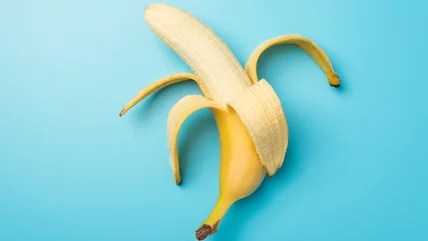
Google would reply by saying: Name one historian making that case. Islamic historians thought it was the banana, which makes a certain amount of low-comedy sense. Jewish tradition suggests the pomegranate, among other possibilities. Figs, mushrooms, apples, pears, and quinces have also been mentioned as reasonable candidates, but the truth is that no one really has a clue. One thing’s for sure: the tomato, as a New World plant, is fairly far down the ladder of speculation.
Oh, and sorry to have submitted twice. My computer froze momentarily and the old itchy trigger finger struck in retaliation!
With regards to the tomato, yes, people have said that it could have been the original forbidden fruit. This would give insight into its otherwise unexplainable name of "love apple." It would also explain the early, European misconception that tomatoes were poison. To read more on this line of thought, i could point you to several sources. Online, you could start with the Epicurean Table,...+READ
With regards to the tomato, yes, people have said that it could have been the original forbidden fruit. This would give insight into its otherwise unexplainable name of "love apple." It would also explain the early, European misconception that tomatoes were poison. To read more on this line of thought, i could point you to several sources. Online, you could start with the Epicurean Table, http://www.epicureantable.com/articles/atomatohis.htm. Yes, I realize that it was introduced in modern times to European society from Mexico, but the tomato has been around longer than that. There is no evidence that it could not have been a rare and strange fruit existing in the Garden of Eden. Do you really take Google as the highest power on historical information?-COLLAPSE
With regards to the tomato, yes, people have said that it could have been the original forbidden fruit. This would give insight into its otherwise unexplainable name of "love apple." It would also explain the early, European misconception that tomatoes were poison. To read more on this line of thought, i could point you to several sources. Online, you could start with the Epicurean Table,...+READ
With regards to the tomato, yes, people have said that it could have been the original forbidden fruit. This would give insight into its otherwise unexplainable name of "love apple." It would also explain the early, European misconception that tomatoes were poison. To read more on this line of thought, i could point you to several sources. Online, you could start with the Epicurean Table, http://www.epicureantable.com/articles/atomatohis.htm. Yes, I realize that it was introduced in modern times to European society from Mexico, but the tomato has been around longer than that. There is no evidence that it could not have been a rare and strange fruit existing in the Garden of Eden. Do you really take Google as the highest power on historical information?-COLLAPSE
This is TOO funny and such a great post. I never stop to think of things in this light... sure glad ya did.