If you were willing to navigate the long lines at Saturday's San Francisco Street Food Festival, you had your pick of food from more than 50 local vendors, ranging from small one-person operations like the Creme Brulee Cart to fancy, established restaurants like the Slanted Door.
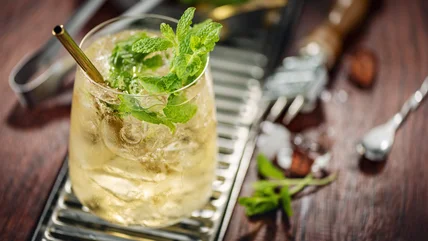
The event, a fund-raiser for the nonprofit food business incubator La Cocina, also featured a two-day conference on street food issues. We were excited to see a panel called "Truck Food Nation" led by Mississippi-based food writer John T. Edge, a monthly columnist for the New York Times, director of the Southern Foodways Alliance, longtime contributor to the Oxford American, and all-around inspiring and funny writer. We sat down with him over a ginger, mint, and bourbon cocktail at the hotel bar to talk about some of his favorite street food around the country, and about how much of it is, let's be honest, crap.
What were some of the best things you ate at the SF Street Food Festival?
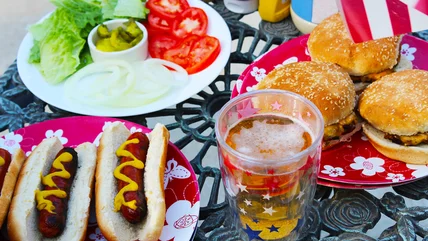
I'm always stunned by Thomas Odermatt's porchetta sandwich with those pork skin cracklings that you're sure you're going to crack a molar on. I ate half a hot dog from Let's Be Frank with what they call devil sauce—but the palate here, in terms of heat, must be different from mine. It wasn't that damn hot, but it was a great hot dog.
How did the street food you had here compare to the street food in the South?
Well, there isn't that much street food in the South. As far as how what I found here compares to small businesses in the South and what they're doing, I've been thinking about this a lot. In generations past, the white country woman from Kentucky who opened a café and was a member of the underclass of the South was a person who fried chicken. And the black working-class former ironworker in Alabama was the guy that cooked barbecue. Now, like everywhere else, the working-class cooks that are sustaining the South are recent Vietnamese immigrants or recent Mexican immigrants or recent Korean immigrants. That's kind of the national story. My love of barbecue is as much kalbi coming from a Korean shop, and my po' boys are banh mi from a Vietnamese shop.
Do you think that new ethnic influx is helping change America's tastes?
I think there's two things going on. Those cultures are assimilating to the South, but then also those cultures are transforming the taste of the South. The best greens in Atlanta are served by Taqueria del Sol. They put chile de arbol in their turnip greens.
In your introduction to the panel, you said that street theater was an element of street food. What did you mean by that?
You can look also at the Fojol Brothers in DC who have concocted a place that does not exist, Merlindia, that they claim is their homeland. They roller skate around the truck wearing turbans, and they're basically taking Indian food and repackaging it. But repackaging it by way of street theater, by way of their getups, their garb, their vibe. I admire the marketing nuts of doing that. You see that in Big Gay Ice Cream Truck, this inventiveness and this willingness to not take yourself so seriously. The thing I hope for food is we can find a way to not take ourselves so darn seriously.
What's next for street food?
If street food is going to mature in America, events like this will help frame that maturity. This is the first conference that pretends to be national and embraces street food as a national phenomenon, and that's an important milestone. I really admire what the Vendies have done, but that's New York and LA. There are Korean taco vendors in Oklahoma City. This matters all across the country.
Not everybody is a fan of street food. What's some of the criticism you've encountered?
I came home from giving a talk in Florida about street food and found the city council in Oxford was working to effectively outlaw street food. Here I am rhapsodizing about the possibilities of street food, and I return home to reality. This is a really contentious issue because [brick and mortar] business owners respond to [street food] as a threat, the perception of roach coaches. And, right now, I'd say 80 percent of street food in America is bad. I don't mean “bad” because it wasn't organically sourced, I'm talking about bad because it wasn't prepared with care. We spend so much time celebrating [street food], but we need to be realistic about what it is right now, who's serving it and what it can be.