Tasty Kosher Products

Tasty Kosher Products

Kosherfest debuts chocolate liqueur and treats for doggies

By Lynne Meredith Schreiber

Organic Juices
Organic Juices
Etrog marmalade
Etrog Marmalade
Dog food
Dog Food

Until recently, you couldn’t find kosher versions of high-end products like fine cheeses, exceptionally marbled meats, or healthy bottled juices. What you could find among the 400,000 certified-kosher foods in the United States was wine, convenience and frozen items, candies, and Middle Eastern food like hummus and falafel. That’s changing, fast. Some estimates put the number of Americans who keep totally or partially kosher at 10 million. At the 19th annual Kosherfest, a food and beverage trade show held in November at New York’s Jacob K. Javits Convention Center, the buzz was about gourmet and organic. Here are 10 of our favorite newer offerings. Some are available now, online or in specialty markets. Others are yet to be picked up by retailers, but look promising.

1. Cheese. Since kosher-keepers don’t mix dairy and meat, cheese must include synthetic rennet instead of animal enzymes. Les Petites Fermieres presented a tangy olive- and garlic-enhanced Mediterranean Jack, and Royal George from Britain showed off a creamy double Gloucester, made with milk from grass-fed cows. Both cheeses can be found at better mainstream supermarkets of the Whole Foods variety, as well as online at igourmet.com. The Jack is also sold at Zabar’s.

2. Organic Juices. Elite Naturel makes light fruit juice with just the right amount of sweetness. Best flavors: pomegranate and honeydew melon. Available at some Whole Foods Markets and online.

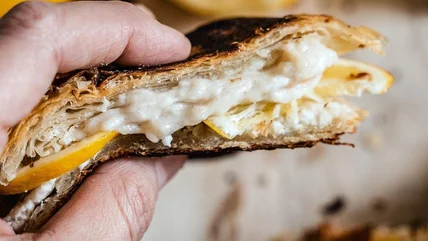
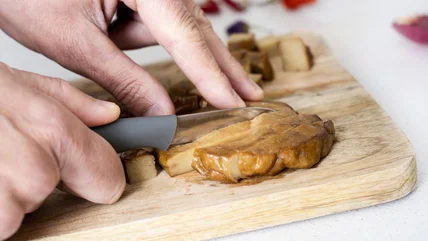
3. Etrog Marmalade. Aunt Berta’s version, from Israel, is made with the fragrant citron, or etrog, which also plays a central part in the fall harvest holiday of Sukkot. Buy it at igourmet.com or Jerusalem Baskets.

4. Sausage. Since pork is off-limits, it’s often hard to find good kosher sausage. Abeles & Heymann Gourmet Kosher Provisions unveiled the first ever kosher cervelat, or summer sausage, which is garlicky without being overpowering. It’s sold at Kosher Club and KCKosherCoop.com.

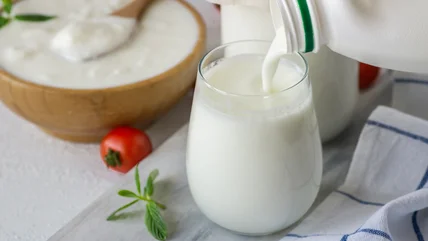
5. Greek Yogurt. Stonyfield Farm’s Oikos organic Greek yogurt is the first Greek yogurt designated kosher. Vanilla and plain flavors are creamy and satisfying without being heavy. Until now, religious Jews had to substitute weaker, thinner yogurts when making things like tzatziki. Available in many supermarkets.

6. Beef Jerky. R.J.’s Kosher Beef Jerky offers nine chewy, vacuum-packed flavors including hickory smoked, sesame, and teriyaki, as well as sausage sticks. Dehydrated meat isn’t necessarily unkosher, but R.J.’s was the first to make it. Available at kosher markets in Los Angeles, New York, and New Jersey, and online.

7. Chocolate. There was no shortage of sweet treats at Kosherfest, though Tumbador fine chocolates stood out. Featuring organic raw ingredients harvested under fair-trade practices, the creamy squares come in flavors such as passion fruit, Vermont maple syrup, and Canadian whiskey. The company was cofounded by pastry chef Jean-Francois Bonnet, formerly of popular New York restaurant Daniel. Its products, marketed under the label Cibo, can be purchased at JFK Airport and, if you live in the greater New York metropolitan area, through the grocery delivery service FreshDirect.

8. Convenience Foods. FKF Vending debuted kosher hot-food vending machines that warm up premade panini, pastrami sandwiches, and ricotta-zucchini–pine nut baguettes, among other offerings. Founder Andrew Pieri aims to market his product to corporations and hospitals, which would get the machines for free but give up a percentage of the sales to him.

9. Spirits. Toasting “L’chaim” is an essential part of any simcha (celebration). Straight vodkas, whiskeys, and other grain-based alcohols are kosher by default, but when you’re talking wine or flavored booze, it must bear a kosher certification because of the added ingredients that aren’t necessarily distilled. Monroe, New York–based Castle Spirits is the only kosher distillery making products with added flavors in the United States. It’s located in founder Solomon Wertzberger’s backyard. It offers 20 different kinds of brandies, including its Slivovitz brand plum brandy, but the tastiest offering at Kosherfest was its rich chocolate truffle liqueur. The company’s products can be found in Brooklyn, New York, at shops where kosher wine is sold, and at Judaica stores in large metropolitan centers.

10. Dog Food. Now even your dog can attain spiritual elevation. Wagatha’s offers kosher organic dog biscuits crafted in Vermont that include human-quality ingredients like flax seed, whole wheat flour, and EVOO. You can buy them online.

POST A COMMENT |18 Comments

COMMENT

  • this article is somewhat out of date-I would be happy to update it with what I found at thus year's show.

  • I posted this on the Chow Board but I'm having a really difficult time finding Rokeach Nyafat this year. I was informed by my local kosher market that it isn't being manufactured any longer. Does anyone have any info on this??
    THANKS!

  • On the topic of Kosher foods, I just found a company which imports foods from Israel and sells them in the US. The company is Holy Food Imports and they provide products which are similar to those mentioned on this list.

    Their website is at www.holyfoodimports.com however until the company fully opens on May 1st, the website will be unavailable.

  • rockycat: relax....no one is beeing hateful....just a bunch of observations based on my experiences with Kosher certification...nothing more. I have no problem with people who buy Kosher for religious reasons but "selling" Kosher certified foods as "better" is a no-no in my book....

  • Right. So it looks like some CH'ers have an axe to grind with the concept of kashrut. Please take it up with your rabbi (or not) and leave off the comments that are starting to sound like a self-hate fest.

    There are smaller certifying agencies that may be less than honest. There are also various city health inspectors that are less than honest. Next problem?

    You don't have to do anything...+READ

    Right. So it looks like some CH'ers have an axe to grind with the concept of kashrut. Please take it up with your rabbi (or not) and leave off the comments that are starting to sound like a self-hate fest.

    There are smaller certifying agencies that may be less than honest. There are also various city health inspectors that are less than honest. Next problem?

    You don't have to do anything special to become kosher? Maybe yes, maybe no. Depends on what you're already producing. A lot of processed food is inherently kosher or already produced to kosher standards but not certified. Without the "guarantee" of a kosher symbol, though, your customer has no way of knowing how you're producing your product and they'll go buy someone else's.

    And a person who keeps "partially" kosher may only keep kosher at home but eat out anywhere. Or he/she may only buy kosher meat but not have separate sets of dishes. Or any of a dozen other variations that might exist. Hardly like "a little pregnant."

    Btw, I don't keep kosher myself although I was raised with a thoroughly extensive knowlege of kashrut. I see no reason, however, to denegrate those who do keep kosher.-COLLAPSE

  • Pollo, I will never forget as a child, watching the clerk in the supermarket place sticker after sticker of KOSHER FOR PASSOVER labels on the milk that was alredy in the dairy case and then jacking up the price.

  • Chinese food industry is a mess (to be very polite) and needs lots of help but grasping at the Kosher certification and rabbis is a perfect example of "blind leading a blind".....

  • How’s this for an unexpected first sentence? “Chinese exporters, facing a U.S. backlash over tainted food products, are turning to an unlikely group of inspectors to help clean up their act: Jewish rabbis.” Fire the FDA; hire the rabbis. Bloomberg reports that kosher certifications in China have doubled in the last couple of years and the Orthodox Union, an inspecting organization, is...+READ

    How’s this for an unexpected first sentence? “Chinese exporters, facing a U.S. backlash over tainted food products, are turning to an unlikely group of inspectors to help clean up their act: Jewish rabbis.” Fire the FDA; hire the rabbis. Bloomberg reports that kosher certifications in China have doubled in the last couple of years and the Orthodox Union, an inspecting organization, is anticipating thousands more in the near future
    this from Chow
    for the rest of this article..here's the link..

    http://www.chow.com/grinder/4671-COLLAPSE

  • goldiekatsu: the reason Kosher certification is called by some as a "religious tax" is that you can "obtain" that certification for a given product without doing anything different to produce it...same ingredients, same processing line, same package, etc.....the difference is having a Kosher representative collect the fee and "approve" the product. Quite a bit different from obtaining organic...+READ

    goldiekatsu: the reason Kosher certification is called by some as a "religious tax" is that you can "obtain" that certification for a given product without doing anything different to produce it...same ingredients, same processing line, same package, etc.....the difference is having a Kosher representative collect the fee and "approve" the product. Quite a bit different from obtaining organic certification. What is interesting is that for some unknown reason people think that Kosher products are actually supperior to non-Kosher products....talk about marketing!-COLLAPSE

  • Please be reminded that the original article states in referenc to the 10 million...


    "Some estimates put the number of Americans who keep totally or partially kosher at 10 million."

    This certainly does not indicate the occasional vegan who occasionally purchases a non dairy kosher product.
    They more likely do not define themselves as "totally or partially kosher"...they define themselves as...+READ

    Please be reminded that the original article states in referenc to the 10 million...


    "Some estimates put the number of Americans who keep totally or partially kosher at 10 million."

    This certainly does not indicate the occasional vegan who occasionally purchases a non dairy kosher product.
    They more likely do not define themselves as "totally or partially kosher"...they define themselves as "Vegans"-COLLAPSE

  • Just a few points here. First of all, there are people other than Jews who chose kosher certified products preferentially to non-kosher certified. A vegan might chose kosher parave if there was no vegan certified equivalent as they know there is no dairy included. Some chose it because they perceive a value to it. So 10mil is not just Jews.

    Secondly, part of the reason companies get kosher...+READ

    Just a few points here. First of all, there are people other than Jews who chose kosher certified products preferentially to non-kosher certified. A vegan might chose kosher parave if there was no vegan certified equivalent as they know there is no dairy included. Some chose it because they perceive a value to it. So 10mil is not just Jews.

    Secondly, part of the reason companies get kosher certification is that it increases their sales (probably for the reasons listed above.)

    Thirdly, it is no more a "religious tax" than organic certification or vegan certification is a "nature tax" a company can chose to be certified or not. When you get certification (of any sort) you need to pay for that service. Choosing to use higher quality ingredients to attract a different market would also cost, and a company might chose that for the same reasons.-COLLAPSE

  • You said it, Pollo!!

  • I have heard quite a few people in the food industry (think large national brands) refer to Kosher certification as a "religious tax".......

  • Yeah, 10 million who keep kosher? Are there kosher Jews on other planets? I came from a kosher home and while my partner insists on us keeping a kosher home, I had it jammed down my throat as a child and hated it. I go out, I eat treyf!!
    But I digress. The only thing that KOSHER signifies is that the product was prepared under rabbinical superviision in accordance with the dietary laws of...+READ

    Yeah, 10 million who keep kosher? Are there kosher Jews on other planets? I came from a kosher home and while my partner insists on us keeping a kosher home, I had it jammed down my throat as a child and hated it. I go out, I eat treyf!!
    But I digress. The only thing that KOSHER signifies is that the product was prepared under rabbinical superviision in accordance with the dietary laws of Kashruth. It doesn't mean it's cleaner or tastes better. However it DOES mean that's it's more expensive. I live in Baltimore which has one of the most concentrated Jewish (Orthodox) communitites in the east. There are so many different hechshers that certain orthodox communites here will recognize one and not the other. I'm sorry. It's all a racket.-COLLAPSE

  • Having/certifying any product "kosher" doesn't add anything new to any given product....nothing in terms of quality or food safety. It has only religious significance to these who follow the "kosher" rules....

  • The article states ..."people who KEEP totally or partially kosher..."
    I wouldn't think that indicates someone who buys a Hebrew National Hot dog occasionally or partakes of the myriad number of items that have been hekshered, but are not specifically advertised as kosher...we all buy many things that if one looks closely has a little OU label etc...would that be considered part of the 10...+READ

    The article states ..."people who KEEP totally or partially kosher..."
    I wouldn't think that indicates someone who buys a Hebrew National Hot dog occasionally or partakes of the myriad number of items that have been hekshered, but are not specifically advertised as kosher...we all buy many things that if one looks closely has a little OU label etc...would that be considered part of the 10 Million??!!... Who knows?
    Since I live in an area with many Halal butchers, the Moslems here are well served...
    As to whether one keeps Kosher..my view is either you "is or you ain't"..not maybe, sometimes, perhaps or when I feel like it or just kosher at home...
    but that is just my personal take on it. People can define their lives as they like....I am not even remotely kosher....never have, never will be...although I promise....I will not eat a "calf that has been boiled in its' mother's milk"!....braised, sauteed, steamed...maybe!-COLLAPSE

  • Ten million does seem a bit high. As of the latest census there were actually only about four and a quarter million Jews in the U.S. The Jewish population has been steadily shrinking since the eighties. The Muslim population has been steadily growing since the eighties and was over one and three quarters million as of the last census (though that doesn't count more recent immigrants or illegals)....+READ

    Ten million does seem a bit high. As of the latest census there were actually only about four and a quarter million Jews in the U.S. The Jewish population has been steadily shrinking since the eighties. The Muslim population has been steadily growing since the eighties and was over one and three quarters million as of the last census (though that doesn't count more recent immigrants or illegals). A lot of Muslims in the U.S. buy kosher because halal products are more difficult to come by. Kashrut is also, for the most part, stricter than halal. This still doesn't add up though.
    I imagine semi-kosher would generally mean abstaining from the big things (pork, cheesesteaks, lobster, etc.) but not restricting oneself to only Kosher labelled products. I know a lot of my students take this approach. Semi-kosher could also presumably include non-Jews who buy some kosher goods because of the perception that it is a cleaner or higher quality product. If you include everyone who buys Hebrew National hot dogs in this category then I guess 10 million is not an unreasonable estimate. While kashrut is bivalent (either kosher or not-kosher) one can buy kosher and not keep kosher.-COLLAPSE

  • 10 million...how is that possible? There are only...6 million jews in the US...and only a minute fraction of them may be kosher or "Semi-kosher"
    Whatever that means... (partially pregnant..anyone?!)