The Allure of Cheap Wine

Paul Blow

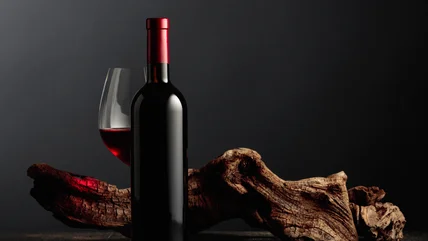
For the first time in my life, my tastes in wine have been going down the price scale rather than up. I have an apartment full of expensive Cabernets, Super Tuscans, and American Pinot Noirs—on wine racks, stacked on closet shelves, piled in boxes under the kitchen table—but on most nights I just can’t bring myself to open one. Why? Because I already know what it’s going to taste like. Instead, I go to the store and find something idiosyncratic and inexpensive from Europe and find happiness in a bottle of the unknown.

To be fair, price has little to do with my preferences: It’s really a question of style. Too many wines taste too similar. A plush Cabernet Sauvignon from Napa Valley is almost exactly like one from Coonawarra in Australia or Chile’s Maipo Valley or Washington state. Just naming these wines, I can taste them: big cherry, cassis and plum fruit, the sweet aromas of vanilla and spice, and a cedary, toasty haze. Which makes me realize that it’s not even the fact of the similarity I’ve come to dislike, it’s the way it’s being accomplished: the drippingly ripe fruit, the overly soft tannins, the surfeit of new oak. These winemaking techniques produce a veneer of modernity that, even when applied to different grapes from different countries, makes distinct wines feel the same. It’s a blatant admission of conformity: People make their wine to pander to what they think consumers want or to appeal to international critics, not out of a desire to represent their terroir in as direct and unmediated a way as possible. Cabernet Sauvignon from different places should taste different. New French oak, no matter where it’s applied, tastes the same.

Wine producers who don’t spend all their money on new oak barrels every year can afford to charge less for their wines. And the wines also taste more of themselves: A Beaujolais will have that taut berry fruit and joyful smell of freshly turned loam, a Friulian Tokai will have bright acidity and the aroma of bitter almonds. To be priced at under $15 a bottle, some of these wines might have an occasional flaw: Maybe they are a bit simple or have a little funkiness from an old and musty cellar. But I’m happy to forgive imperfection if the wine is not buried under layers of makeup. In the past year, I’ve discovered loads of new, wonderful appellations: Italy’s Marche region, France’s Bergerac, Portugal’s Alentejo, Greece’s Peloponnese.

More of these wines I’m enjoying now tend to come from Europe—France, Italy, and Germany, primarily, as well as Spain, Portugal, Austria, and Greece—than from the New World simply because these places have been making wine longer, and for a local population, with no need to compete with a worldwide conspiracy of sleek, oaky wines. Most new-world wines were never local staples but business ventures first and foremost.

Here are a couple of basic, inexpensive, honest wines I’ve been enjoying lately.

Domaine de la Pépière Muscadet Sèvre et Maine “Vieilles Vignes” Clos des Briords 2006. That rather long set of words describes one of the finest Muscadets on the planet. The white wines from this region can be insipid, but this is not one of them. It comes from almost 80-year-old vines—a rarity anywhere in the world—with roots deep in the granite subsoil. Vigneron Marc Ollivier, a wild-bearded Frenchman, hand picks the grapes and ferments with wild yeasts, which yields gentler fruit and more complex wines. The wine achieves a degree of concentration and intensity rarely found in Muscadet; its calling card is minerality. Laser sharp, it smells of lemons and green apples (not a trace of oak), with more than a whiff of rock dust after a light rain. I found this bottle recently for $13.99, an astonishing price for a wine with this level of craftsmanship.

Masciarelli Montepulciano d’Abruzzo 2004. I love the Montepulciano grape, which makes its most famous wine in the Marche region on Italy’s east coast, about midway down the boot. This may not be Italy’s most famous tourist area, but its reds and whites can be distinctive in their rounded, earthy deliciousness. Montepulciano tends to make dark purple wines that have tannic blackberry and blueberry fruit along with some dark plum and often a hint of earth and meat. The Masciarelli family has been making this basic wine for about 30 years (the family makes two other, more expensive versions), and its simple directness, accessible sweet fruit, and incredible versatility are inspiring. The wine goes as well with a hamburger or stir-fried pork as it does with squid-ink pasta. And for $7, it’s just about unbeatable.

Jordan Mackay is a San Francisco–based wine and spirits specialist whose work has appeared in publications such as Gourmet, the Los Angeles Times, Food & Wine, and Decanter. His Juice column appears most Thursdays. Fan him on Facebook and follow him on Twitter.

POST A COMMENT |15 Comments

COMMENT

  • here here!

  • I really thanks jason carey, because Montepulciano is from Abruzzo and not Marche!!! where the most famous wine is a white called Verdicchio....Nobile di Montepulciano - from Montepulciano city - is made with a clone of Sangiovese called "gentle plum" minimum 85% and then almost what-evere-you want....I also agree with the fact that 10 dollar is a good price for decent wines....but not for the US...+READ

    I really thanks jason carey, because Montepulciano is from Abruzzo and not Marche!!! where the most famous wine is a white called Verdicchio....Nobile di Montepulciano - from Montepulciano city - is made with a clone of Sangiovese called "gentle plum" minimum 85% and then almost what-evere-you want....I also agree with the fact that 10 dollar is a good price for decent wines....but not for the US Market!!!!! You can drink 8,99 wines from Chateau S. Michelle in Washington and actually they are great, but at the same time they are all the same- syrah tastes like merlot that tastes like cabernet!!!! I do not personally care if a wine is good or supergood, I think that after a while - over a couple of decades - that you are drinking wine, the thing that you are looking for is for diversity, surprise, excitation, discovery...a little bit of traveling around the world with a glass...if you stuck to cab or pinot noir and keep the flag high, because it is in fashion and the flavor is yours...I think there is a little limit...there are tons of wine in this beautiful american market, more or less expensive....but every one worth to be drunk....because everyone bears a unique particular flavor...than you can not like it, but it is also the beatiful thing of wine: one race of berry that can produce so many different and distant flavors( when you go to the restaurant and order a plate to try something new and then find out that you do not like it do you give it back??? if yes I agree with you drink just cabernet!!)...to end this long dissertation..if you stuck yourself in a certain kind of wine like cabernet...it is just your palate that gets used, the wine does not get better!!!-COLLAPSE

  • It's about time! And you had to wait for an economic downturn to realize that! However you are making one mistake, the $40 botlles produced in these same europeans regions are also very diverse and really good unlike these boring new world wines that you have been sipping for years and that are crafted in the same "international style".
    Rather than Malbec from Argentina, try the original from...+READ

    It's about time! And you had to wait for an economic downturn to realize that! However you are making one mistake, the $40 botlles produced in these same europeans regions are also very diverse and really good unlike these boring new world wines that you have been sipping for years and that are crafted in the same "international style".
    Rather than Malbec from Argentina, try the original from Cahors, France, you think you know Shiraz? try a Cornas or Vin de Pays du Gard, Sauvignon from New Zealand? try a Quincy or Menetou Salon , you will eventually understand why europeans don't go by the varietal but by the region or the village.
    Recently (11/08) the Boston Globe made a selection of best values under $12. Out of 50, 12 were french, 12 italians, 8 spanish, 4 australians, 4 argentinans, 3 chileans, 2 americans, 1 nz, 1 south african, 1 indian and I forgot the last two. Nobody mentionned it but shoud have: even with a strong Euro, Old Europe still make by far the best value wines.!!
    If I can make a suggestions find a store which sells "artisan wines" "or boutique wines". By that I don't mean wines produced in very tiny quantity that fetch $100 and more, but good, honest little wines, produced by one owner on a few acres, wines that seem authentic and not Brands heavily marketed. Stay away from big end-caps that always feature "coca-cola wines", heavily marketed products for mass consumption, at $10 or $40 they will still taste the same within their category. The French and the Italians have hundreds of thousand of struggling small winemakers who make their wine from their heart , wines that are unique unlike the Ocean of boring wines produced by the big companies of the new world. Go for esoteric, support diversity and the people who make it!-COLLAPSE

  • Bunbohue (October 2) referred to "overripe, new oak, high alcohol" wines, which he called "homogenous international style" and "new world" wines. Are these the kind of wines that have been disparagingly called "fruit bombs," or are fruit bombs something else?

  • I agree very much with the tenor and tone of this discussion: Drink What You Like, Not What Someone Says You Should Be Drinking! Some of my favorite wines might be termed picnic wines, just perfect for a summer day (or evening) in the park, such as Fall Creek (TX) Chenin Blanc. This vouvray-style tipple gives a lot of bang for six bucks---so what if it's a bit uncomplicated?? That's what you want...+READ

    I agree very much with the tenor and tone of this discussion: Drink What You Like, Not What Someone Says You Should Be Drinking! Some of my favorite wines might be termed picnic wines, just perfect for a summer day (or evening) in the park, such as Fall Creek (TX) Chenin Blanc. This vouvray-style tipple gives a lot of bang for six bucks---so what if it's a bit uncomplicated?? That's what you want for a picnic wine! Okay, you want more going on? Try Becker (TX) Vineyards Fume Blanc or better still, how about a Rhone Blend? Give Perrin & Fils Vacqueyras Les Christins (80% Syrah, 20% Grenache) a whirl and see what you think!!! Down with Wine Snobs!!!!-COLLAPSE

  • There are incredibly good wines under $10, and more in the $10-$15 range that will easily beat most $40-$50 wines in tastings - and, in fact, do. I've also tasted awful wines in that higher price range - certainly wines that lack balance and depth. It's not a matter of getting what you pay for. More money does not equal better wine. Wines can be crafted very well at under $10 per bottle....+READ

    There are incredibly good wines under $10, and more in the $10-$15 range that will easily beat most $40-$50 wines in tastings - and, in fact, do. I've also tasted awful wines in that higher price range - certainly wines that lack balance and depth. It's not a matter of getting what you pay for. More money does not equal better wine. Wines can be crafted very well at under $10 per bottle. Wonderful grapes can be abundant, and exchange rates favorable, resulting in appreciable values. Conditions that favor an exceptional vintage are a matter of luck, not expense. There are many examples, but I'll leave you with the example of the Castano Solanera 2004, a blend of Monastrell, Cab Sauvignon, and Titorera (variety 55 on my new quest for 100). I think it's a stunning wine, but investigate for yourselves; you should be able to find it for under $15.
    I think that one thing that drives price is people paying a premium for wines they think they should like, and that the have some understanding of - big Cabernets from California, for example. They think that alcohol and oak equals good. It's easy to find values by finding wines you truly appreciate for the flavor, not the label or familiarity.-COLLAPSE

  • yes there is a grape called Montepulciano, it is a speciality of Abruzzo, not to be confused with Vinoble di Montepulciano, which is made from Sangiovese and other grapes.... Montepulciano d'Abruzzo can be an excellent value everyday drinking wine.

    Also about interesting non big wines.. There are some terrific California wines as well in the 15-20 dollar range. such as A white from the producer...+READ

    yes there is a grape called Montepulciano, it is a speciality of Abruzzo, not to be confused with Vinoble di Montepulciano, which is made from Sangiovese and other grapes.... Montepulciano d'Abruzzo can be an excellent value everyday drinking wine.

    Also about interesting non big wines.. There are some terrific California wines as well in the 15-20 dollar range. such as A white from the producer Clos Saron and Many reds from a winery called Luddite.. much more indicative of the fruit and not at all jammy or oaky.. truly artisinal hand crafted wines that speak of the place they are made-COLLAPSE

  • Have I missed something in my wine education or is there a grape named Montepulciano? I have always thought of Montepulciano and a hilltop town in Tuscany that produces Sangiovese, Merlot and other local grapes.
    Please clarify this one for me.

  • ps. $10 is not 'cheap'. $10 is reasonable. Parker has reviewed plenty of reds and whites at $9.95 which he deemed 'outstanding', which illustrates that this price point is sufficient for some remarkable wines.

    $5 is 'cheap', and $2 is 'absurdly cheap'. I picked up a bottle of Cserzegi Fuszeres from Trader Joe's for $1.99 and it was a hell of a lot more interesting than anything Fred Franzia has...+READ

    ps. $10 is not 'cheap'. $10 is reasonable. Parker has reviewed plenty of reds and whites at $9.95 which he deemed 'outstanding', which illustrates that this price point is sufficient for some remarkable wines.

    $5 is 'cheap', and $2 is 'absurdly cheap'. I picked up a bottle of Cserzegi Fuszeres from Trader Joe's for $1.99 and it was a hell of a lot more interesting than anything Fred Franzia has ever crammed into a bottle (not that 2BC doesn't have its merits, but this was far more interesting -- Gewurz nose with a Sauvignon Blanc palate). My cup of tea? Not so much. But not bad either. Some gas stations charge more for an equivalent volume of bottled water! That's cheap.-COLLAPSE

  • Lenny C is spot on. I dare anyone to join the Wine Century Club ( http://www.winecentury.com/ ) and not have a great, often incredibly cheap, time doing it. The rules are simple: taste wines made from 100 different grapes. Of course, if you want to maximally enjoy it, you'll put a little thought into which grapes, and how the wines are made. However...

    It's almost inevitable to find yourself...+READ

    Lenny C is spot on. I dare anyone to join the Wine Century Club ( http://www.winecentury.com/ ) and not have a great, often incredibly cheap, time doing it. The rules are simple: taste wines made from 100 different grapes. Of course, if you want to maximally enjoy it, you'll put a little thought into which grapes, and how the wines are made. However...

    It's almost inevitable to find yourself exploring the Loire, Languedoc, Roussillon, the Jura, the Douro, Alsace, Austria, and of course Italy (you could probably taste 200 different grapes during a summer in Italy, if you wanted to) in the course of ticking off the little boxes. Plus, no matter how hard you try, you're not going to be spending more than $15 on Italian whites, some of which are among the most intriguing wines to drink young. And I don't think it's possible to complete a Century Club application without trying a bunch of obscure Italian and French varietals, some of which may be extinct sooner rather than later.

    Petit Verdot makes some very structured wines (and in the wrong hands, you'll choke on the tannins!). If you like that, you'll probably like wines made with Sagrantino, Ruche, Aglianico, Monica, maybe even Tannat. One way to find out!-COLLAPSE

  • Try getting out of the ordinary a bit - I found a wine called "yard dog" that's 45% petit verdot that I love - for $8.99 - that tastes like nothing else that ever hit my palate - look for different blends of grapes that you never heard of, or % blends that make no sense to you, you might be surprised

  • I agree with rcbcd50. Sure, there are some overpriced wines out there (as soon as they get in the Wine Spectator, you know prices are going to go up), but you can find some amazing wines in the $20-$40 range which are pretty darn special if you look beyond the well-known names. I just purchased a $28 bottle from Cardhill Cellars in Oregon -- their reserve Pinot Noir -- that outdoes anything I've...+READ

    I agree with rcbcd50. Sure, there are some overpriced wines out there (as soon as they get in the Wine Spectator, you know prices are going to go up), but you can find some amazing wines in the $20-$40 range which are pretty darn special if you look beyond the well-known names. I just purchased a $28 bottle from Cardhill Cellars in Oregon -- their reserve Pinot Noir -- that outdoes anything I've tasted in the $10 category. Smaller wineries in less-known AVAs can produce beautiful wines that don't have a big price tag.-COLLAPSE

  • Good article, but I think the bi-line is a little deceptive. There are lots of $40 bottles that will blow away $10 bottles. The grapes come from a better location, are more in demand or possibly lower yielding. Also the winemaker will put his/her best lots in the expensive bottle, so you end up with a wine that has more structure, longevity, and depth.
    This article makes an excellent point about...+READ

    Good article, but I think the bi-line is a little deceptive. There are lots of $40 bottles that will blow away $10 bottles. The grapes come from a better location, are more in demand or possibly lower yielding. Also the winemaker will put his/her best lots in the expensive bottle, so you end up with a wine that has more structure, longevity, and depth.
    This article makes an excellent point about the homogenous high alc, ripe, heavy oak style...but that doesn't mean all $40 bottles are lacking any fruit/mineral character.
    On the flipside, there are a LOT of $10 bottles that are fine to chase down your dinner with but nothing to get excited about (charles shaw).

    There's a time and place for both. Hopefully wineries will start reeling in the alcohol and oak, but for now that's how it is. And I don't hear a lot of people demanding classic european style cabernet. Maybe as the collective palate gets more sophisticated, so will the wines-COLLAPSE

  • three buck chuck........from trader joes is fantastic cheap wine......thanks chris

  • I spent nearly a decade living & working in the Australian wine industry, like yourself I am sick of the homogonous international style of wine - overripe, new oak high alcohol.
    I became so jaded with 'new world wine' I actually quit my wine career ( after 15 years in the trade, winemaking & viticulture).
    I subsequently moved back to Europe where I now enjoy drinking wine again- mostly cheap...+READ

    I spent nearly a decade living & working in the Australian wine industry, like yourself I am sick of the homogonous international style of wine - overripe, new oak high alcohol.
    I became so jaded with 'new world wine' I actually quit my wine career ( after 15 years in the trade, winemaking & viticulture).
    I subsequently moved back to Europe where I now enjoy drinking wine again- mostly cheap ($6-7) Italians & cab franc Loire red.
    Lower alcohol wines that I can drink everyday & enjoy with food without having to think about it too much. Thank God!-COLLAPSE