The New Yorker plumbs the history of the hangover. More...
Browsing on your mobile phone? Take a look at our mobile edition »
Foodie friends of mine recently moved to a house with an ever-encroaching thicket of bamboo in the backyard. Could they eat it, we wondered the other night as we stood looking at the spindly stalks that—if left unchecked—might take over the neighborhood.
If you’re Joi Ito that’s exactly what you do. The tech entrepreneur has a video on Boing Boing that shows how he and his partner harvest and prepare young bamboo shoots from their backyard in Japan, a labor-intensive two-day process. As Bonnie P. of the Ethicurean says, “By the time it’s ready to eat, his forest has probably grown another five feet.”
Apparently I’m not the only person wondering about growing bamboo for food. At least it would be one edible landscaping the neighbors couldn’t complain about. Unless you happened to go on vacation, stopped harvesting, and your edible wonder took over their yard as well.
Posted by
| today at 10:33am
| 0 comments
Tagged with: harvesting bamboo, joi ito, bamboo shoots, boing boing, bonnie powell, ethicurean, edible landscapes, edible lawns
Attention: You’re cooking your vegetables all wrong and you have been for years!
The New York Times’s Tara Parker-Pope focuses on the best methods for cooking vegetables to retain their vitamin content in her Well column this week. But reading it may cause all except the super-nutrition-conscious a bit of unease.
The column is based on the premise that it’s not just the sheer amount of vegetables we eat that matters, but also the way we prepare them. Are you gently nurturing the phyotochemicals and vitamins in the produce? Or are you cruelly cooking all the health from your green stuff?
Here’s the rub: All vegetables are not alike. So to get the most from your carrots, zucchini, and broccoli, you should be boiling them, rather than what your mother taught you, which is that they’re more nutritious if you steam them. And your tomatoes should be cooked, never raw, to increase the levels of lycopene. But some foods are best raw, while others are most nutritious if you pressure-cook or microwave them. You getting all this?
Meanwhile, the conventional wisdom that says frozen can be as healthy as fresh is apparently bunk according to Parker-Pope, as “studies show that after six months, frozen cherries have lost as much as 50 percent of anthocyanins, the healthful compounds found in the pigment of red and blue fruits and vegetables.” Don’t even think about frying your vegetables—unless you want them to taste good, which other studies (not to mention anecdotal evidence) have shown make the difference between young people accepting or rejecting vegetables.
It’s all enough to make you run screaming from the produce aisles and into the arms of the nearest fast-food joint.
Posted by
| today at 8:12am
| 0 comments
Tagged with: vegetables, boil, frozen, cooking methods, tara parker pope, well, new york times
Pity the unsuspecting rube who falls for the seductive lure of a set of sexy knives. Chad Ward—author of the forthcoming book An Edge in the Kitchen: The Ultimate Guide to Kitchen Knives—has a funny and informative piece on Leite’s Culinaria designed to keep you from falling for the wrong sort of knife. It’s scenes like this that you want to avoid:
You see them in the store. They are beautiful, with their sexy handles all lined up just so. You glance around and then surreptitiously fondle them, damning the safety device that keeps you from sliding the gleaming blade from the block. The salesman sidles up and in a throaty whisper says, ‘It comes with the sharpening steel and the mango slicer.’ You swoon.
It’s all downhill from there: a quickie commitment, a brief honeymoon phase, and a lifetime of regret. Don’t let it be you.
Posted by
| yesterday at 1:34pm
| 4 comments
Tagged with: how to buy a knife, chad ward, leite's culinaria, an edge in the kitchen, sexy kitchen knives, knives, kitchen tools
Fast Food: Ads vs. Reality has become quite the Internet phenomenon, even inspiring copycat efforts on the part of more mainstream outlets.
Now comes the German response. The ad critics at Pundo3000.com have created Werbung Gegen Realität. It’s a well-done look at 100 packaged foods photographed and compared side by side with the packages they came in—usually illustrated with a beauty shot of what the manufacturers want you to think the food will look like. Chocolate seems to fare pretty well, while canned meat and TV dinners do pretty poorly.
One thing the folks behind Fast Food: Ads vs. Reality should consider: a snappy video to accompany their findings.
Posted by
| yesterday at 10:58am
| 2 comments
Tagged with: fast food ads vs reality, packaged food, food photography, pundo 3000, food labels
For those who can’t get enough: The New Yorker goes long on the global food crisis this week with an omnibus review by the Sunday Telegraph’s Bee Wilson (herself the author, inevitably, of a book on honeybees). Wilson takes a look at what she calls “a second wave of food-politics books, which has taken the genre to a new level of apocalyptic foreboding.” She’s defining the first wave as Fast Food Nation, which may have been truly terrifying but “also left some readers with a feeling of mild complacency, as they closed the book and turned to a wholesome supper of spinach and ricotta tortellini.” In this second wave—consisting of books on the food crisis, overfishing, and more—we’re all implicated.
Perhaps the best single overview of this new crop of books, including Michael Pollan’s In Defense of Food, Wilson’s piece is nonetheless a bit too dismissive of Raj Patel’s and Paul Roberts’s attacks on cheap food. “The current food crises are the result of food being too expensive to buy, rather than too cheap,” Wilson writes. That’s technically true, of course, but as an explanation, it seems too neat and self-satisfied, and doesn’t deal with, say, why many countries no longer have their own reserves of food. But that’s an aside: Read the article.
Posted by
| yesterday at 8:52am
| 0 comments
Tagged with: food crisis, new yorker, bee wilson, agriculture, michael pollan, raj patel, paul roberts, green, food prices
There’s manna from heaven, and then there’s the case of 14 tons of Oreo cookies spilled onto an Illinois highway when the driver of the truck fell asleep and slammed into the median, 50 miles southwest of Chicago.
According to an Associated Press article, the cookies were “still in their plastic sleeves.”
Both lanes of traffic were closed while authorities removed the sweets (bulldozer? Backhoe? Eager elementary school kids?). Did we mention they were Double Stuf? That’d make for a lotta licking.
Best headline associated with this story: “Truck Tosses Its Cookies on Interstate Highway near Chicago.”
Posted by
| last tuesday at 4:18pm
| 0 comments
Tagged with: oreo spill, double stuf oreos, 14 tons of oreos, got milk, illinois, double stuf, oreos, san francisco chronicle, associated press
You can’t help but notice that some American supermarkets are selling bags of precubed butternut squash and buckets of prechopped mirepoix, but I have yet to hear of anyone peeling your asparagus for you as they do at the market in Munich. And I must say, I might rather like it if they did.
Nicky at Delicious:Days reports that some stalls at the Viktualienmarkt will peel your white asparagus for free, within five minutes—and send you home with your peelings in a nice little bag if you’d like.
A comment on the post, from blogger Hande of Food Vagabond, tells tales of markets in Rome where they clean and prep your artichokes for you. Such glorious heights I never imagined might exist. I don’t mind chopping my own onion, carrot, or squash, but to avoid prepping artichokes for the rest of my life sounds blissful. Sign me up.
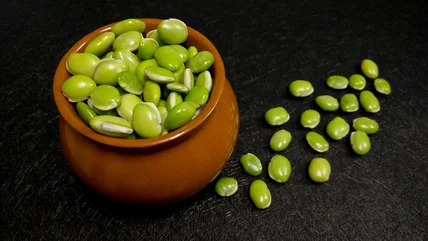
At the San Francisco Ferry Plaza Farmers Market I was recently surprised to see that one enterprising vendor was offering spring fava beans already shelled. I had never seen that before.
Though, as a friend quickly pointed out, the shelling is hardly the annoying part. It’s squeezing each and every bean out of its jacket that really becomes tedious. I could definitely be swayed to buy more fava beans if they came ready to eat.
But really, the artichokes—that would be a winner.
Posted by
| last tuesday at 2:17pm
| 0 comments
Tagged with: delicious days, food vagabond, munich viktualienmarkt, peeled asparagus, ferry plaza farmers market
Thinking of nipping into Great Britain’s Tesco supermarkets for a sixer? Make sure you leave your kids in the car: According to the Telegraph, Tesco has banned alcohol sales to parents when they have their underage kids with them.
It’s not, as I first thought upon reading the headline, just to improve the moral standing of parents. Instead, it’s to curtail underage drinking and the specter of adults buying alcohol for minors. So, presumably, you could be wearing your baby in a sling and still purchase that fifth of vodka you so desperately need, since you’re probably not buying it for the baby. Tesco told staff to “err on the side of caution” when interpreting the policy. Woe to parents shopping with their teens:
Dominic Zenden, a television medium, was told he could not buy six bottles of Budweiser beer when he was accompanied by his 15-year-old daughter Devon.
A cashier at the shop in Sprowston, Norwich, refused to believe Mr Zenden, who has his own series on Sky television, was not going to share the drink with his daughter.
As the commenters to this story point out, it’s always been illegal to sell alcohol to adults when the cashier thinks they’re going to be giving the liquor to minors, so Tesco is just getting more assertive in its enforcement of the law. But trusting the busy cashiers to use their judgment is probably a recipe for lots of consumer unrest.
Not mentioned in the Telegraph piece: last year’s allegations that Tesco promoted underage drinking.
Posted by
| last tuesday at 12:26pm
| 3 comments
Tagged with: tesco, telegraph, liquor, alcohol, supermarket, beer, wine, parents, underage drinking
Fabulously 40 & Beyond has rounded up a brief but brilliant collection of carved and otherwise artistically manipulated food. Drama, angst, comedyit’s all there. Highlights include a watermelon in a desert, screaming in horror at a nonfunctional water tap; a fierce-looking loaf of bread gripping a knife in its teeth; and an orange-peel person walking an orange over to a juicer. The only way it could be better is if the artist or artists received some kind of credit for their work …
Posted by
| last tuesday at 10:17am
| 0 comments
Tagged with: fruit, art, carved food, carvings, food art, fabulously40, fabulously 40 and beyond
In a story that should really be more surprising than it is, the New York Times tells us that agricultural research budgets across the world have declined dramatically in the last few decades—bottoming out in time for this year’s food crisis. Over the last 25 years, donations from the world’s wealthier countries have been halved; until recently, key loans from the World Bank had been cut by roughly three-quarters. In the 1980s, the International Rice Research Institute in the Philippines, for example, had “five entomologists, or insect experts, overseeing a staff of 200. Now it has one entomologist with a staff of eight.”
Luckily, you know, no one eats rice, so it hardly matters.
Apparently, agriculture scientists have warned of the drop-off in funding for years. But government officials were cocky about the world’s ability to feed itself. Even now the importance of these programs, which breed seeds that tolerate or even excel in local conditions or that fight off sudden infestations, seems unrecognized. As the Times reports, “the United States is in the midst of slashing, by as much as 75 percent, its $59.5 million annual support for a global research network that focuses on improving crops vital to agriculture in poor countries. That network includes the rice institute.”
Posted by
| last tuesday at 8:23am
| 2 comments
Tagged with: food crisis, green, agriculture, seeds, new york times, rice, world bank, agricultural research, international rice research institute
First, climate change threatened to rock the wine world. Then it went after beer. Next on the hit list, according to Reuters: the black truffle of Europe.
[P]rolonged drought in many of their prime growing regions in Europe and predictions about global warming suggest the future is about as black as the truffles themselves, to the despair of the growers.
‘The bad harvest years, which used to be the exception, are becoming the norm,’ Jean-Charles Savignac, President of the Federation Francaise des Trufficulteurs (FFT), told Reuters.
And although the truffle’s growing zone is creeping northward, the fungi are vulnerable to the frost that’s typical of northern regions—which means that it’s unlikely Norway and England will pick up the slack.
Humanity’s response? More plantations and scientific investigation of drought- and frost-resistant truffles. And, oh, maybe reversing global warming’s effects somehow. That would be good.
Posted by
| last monday at 5:50pm
| 4 comments
Tagged with: truffles, global warming, black truffle, reuters, climate change, federation francaise des trufficulteurs, drought
Today, making your own liquor is as illegal as ever, and a lot less lucrative. In fact, it’s considerably cheaper to buy it off the shelf.
As a result, today’s home distillers are quintessential do-it-yourselfers. Many are engineers and techies, much like the liquor connoisseurs who attend the Whiskies of the World Expo each year in San Francisco. ‘We have a whole audience that we refer to as the whiskey geek,’ event founder and organizer Riannon Walsh says. ‘I think 90 percent of them are techies.’
The relatively profit-averse attitude of the nation’s fresh crop of microdistillers may be a new twist, but the illegality of what they’re doing remains a hallowed American tradition. In fact, according to the article, it’s a tradition celebrated most everywhere in the world: “home distillation” is banned in all 50 states and almost every country, except New Zealand.
Posted by
| last monday at 4:59pm
| 0 comments
Tagged with: moonshine, wired, home distillation, whiskey, whiskies of the world, white lightning, home distilling, microdistilling
While Europe has been paying attention to how much food it wastes for a few months now, it’s taken a while for the issue to come up on the mainstream media’s radar over here.
But yesterday’s New York Times changed that with “One Country’s Table Scraps, Another Country’s Meal,” a piece that explores both our shameful statistics (we waste nearly 30 percent of all available food—or at least we did in 1997, the last year a comprehensive food-waste study was done in this country) as well as programs that are trying to address it (food-recovery organizations; San Francisco’s citywide compost-collection service).
Unlike Great Britain, which launched a national campaign to curtail food waste among its citizens, efforts here are piecemeal and neither funded nor particularly supported by the U.S. government. The article notes that the last major food-waste campaign, started under Bill Clinton, was killed by the Bush administration. Will the rising costs of food make us all more conscious of how much we waste? Jonathan Bloom, of the Wasted Food blog, says in the Times piece, “The fundamental thing that I’m fighting against is, ‘why should I care? I paid for it.’ The rising prices are really an answer to that.”
Posted by
| last monday at 2:05pm
| 3 comments
Tagged with: food waste, wasted food, jonathan bloom, new york times, compost, composting, san francisco, rising food prices
As much as romantics like to wax poetic about gardening feeding the soul, there’s an awful lot of sweaty, dirty work involved in keeping a bit of cultivated land healthy. That’s all well and good for some (and I personally like kneeling beside a patch of loamy, fragrant black earth), but what about those who aren’t quite up to the task? If they’re in the Boston area, they may be in luck: The nonprofit Growing Places Garden Project helps the infirm or disadvantaged build and keep up container gardens.
The project is small—Growing Places now serves 50 households—but so very cool: Growing Places visits the homes of member families, sets up the gardens, comes back regularly to do maintenance and give advice, and then helps with cleanup after the fall harvest. In between, the garden owners give the containers daily care and eat up the produce. After two years, gardeners graduate from the program and are cut loose, hopefully with enough cultivation skills to keep their now-flourishing gardens going.
Kate Deyst, one of the cofounders of the project, was inspired to begin giving away her gardening services when she read about Dan Barker, the Vietnam vet who built more than 1,400 gardens for the needy in Portland, Oregon, through his Home Gardening Project. Maybe reading about Deyst will inspire someone else.
Posted by
| last monday at 12:48pm
| 1 comment
Tagged with: boston globe, growing places garden project, gardening, vegetable gardens, fruit gardens, dan barker, home gardening project, kate deyst, container gardens
We have no idea what a world of carnivores would look like. Except that it wouldn’t look anything like the present. Author Paul Roberts attempts to take a peek into this cloudy crystal ball in “Carnivores Like Us,” a story in this month’s Seed that’s drawn from his new book The End of Food.
We all know by now that the net environmental impact of a globalized American diet would be devastation. We also know that Asian meat consumption is rising far beyond our cultural expectations. Apparently, “vegetarian diets had less to do with health or spiritualism than with economics: In nearly every country where meat consumption was low (even in countries such as China, where some Buddhist practices encouraged vegetarianism), per capita intake has paralleled economic development.”
For the first time, as Roberts points out, “meat-eating [has] graduated from the category of lifestyle choice to that of collective responsibility.” Nearly everyone who’s paying attention agrees that something’s got to be done. Problem is, nearly no one agrees on what, or even on what lens to look through. Here’s a lengthy quote from Roberts, but it nicely cuts to the heart of it all.
For example, many who approach meat from a largely ethical standpoint, such as animal rights, argue for a completely meat-free culture; others accept some level of meat-eating as long as the animals are produced using ‘free range’ or other humane methods. Among consumers motivated by health concerns, meat eating may be acceptable as long as livestock are fed organic grains or better yet, are raised on grass. The eco-friendly consumers, meanwhile, might tolerate a steak as long as the cow was raised on a carefully rotated pasture (to avoid erosion and over-grazing), or on a local ranch, thus reducing the ‘food miles’ traveled and the associated carbon emissions. And yet, for all the awareness, and despite the eagerness of the food industry to exploit these concerns with a full range of ‘correct’ meats (organic, cruelty-free, local, even soy-based), the result has been a confusing cacophony of choices whose benefits—to health, to the animals, to the planet—are hard to discern.
Hard to argue with that, at least.
Posted by
| last monday at 10:15am
| 2 comments
Tagged with: the end of food, seed, paul roberts, meat, agriculture, vegetarianism, climate change, meat eating
If the recently released Government Accountability Office report on aquaculture could be summed up in three words, they might be: Proceed with caution. Apparently a rush to build “sprawling complexes of floating pens, nets and cages in deep water miles offshore” might be something to consider carefully. You think?
According to a post on a Seattle P-I blog, there is pressure to expand fish farming—by breeders, and also by the White House. Last year the White House “pushed for the creation of the National Offshore Aquaculture Act, which would give the Commerce Department the authority to regulate offshore aquaculture.” Because coastal waters—from 3 miles to 200 miles offshore—are part of the United States’ Exclusive Economic Zone, any farming in this area falls under federal jurisdiction.
But no matter how eager the White House and farming concerns might be to supply farmed fish for the American dinner plate, the report says there are some big issues to work out first. Areas of concern include the need to develop fish foods that “do not rely heavily on harvesting wild fish; exploring how escaped offshore aquaculture-raised fish might impact wild fish populations; and developing strategies to breed and raise fish while effectively managing possible disease.”
Posted by
| last monday at 8:14am
| 0 comments
Tagged with: fish farming, government accountability office, national offshore aquaculture act, aquaculture, seattle post-intelligencer
In a story called “Bloggers, We Will Bury You,” Restaurant Hospitality magazine speaks to chefs and restaurateurs about the new companies that have been set up to manage their online reputations:
You’ve had to put up with the zero-accountability blogging phenomenon for years. But now a new option has emerged: you can hire an independent, third-party company to manage your online reputation. Their promise: No matter what a disgruntled customer, former employee or competitor posts about your restaurant, the online reputation management company will make it difficult for potential customers to find those negative references on the web.
These “online reputation managers” use search engine optimization to make sure that their clients’ official sites appear early in search results on Google, Yahoo, and AOL searches. But that’s not all they do:
They monitor all web content about a client like a restaurant, quickly analyzing it to separate the good from the bad. Then they apply sophisticated search optimization techniques to content containing positive mentions. This causes these pages to appear higher in a potential customer’s search results. Doing so also causes pages with negative mentions get buried deeper in the results list. Ideally they are pushed onto the second or third pages of search results that are returned.
It’s pretty shady business, but these search engine optimization techniques are totally legal. However, things would get really dubious if the “online reputation managers” were also creating positive content on restaurant review sites such as Citysearch and message boards like our own Chowhound (though ’round these parts identifying shills is priority one).
The article states, “It’s not necessary to write fake positive material,” but I’d be wary of ORMs nevertheless. The service costs around ”$1,000 per month for a small business, less for an individual.” Sounds like enough to buy quite a few positive “user reviews.”
Posted by
| last friday at 5:15pm
| 9 comments
Tagged with: food blogs, user reviews, restaurants, restaurant hospitality, search engine optimization, online reputation managers, citysearch, chowhound
One side effect of rising food prices in America could be weaker drinks. In order to save money on liquor, restaurants may start skimping on the amount of alcohol that goes into each drink at the bar. Walletpop (via Grub Street) says: “In the United Kingdom pubs must sell liquor in 25 ml or 35 ml servings and have bar gadgets that pour exactly that amount. Maybe they’ll start becoming a common sight in the U.S., too.”
The gadgets they’re talking about are called optic spirit measures, and they do tend to lead toward weaker pours than the heavy hands of Stateside bartenders. (When a friend of mine was living in London, he said that he had to order double-shots in order to get a cocktail as stiff as your average New York City well drink.) Restaurants looking to cut back on expenses may also start serving smaller portion sizes, less expensive ingredients, and more high-profit-margin entrées, such as pasta.
Posted by
| last friday at 3:49pm
| 0 comments
Tagged with: rising food prices, cocktails, bars, spirit measures
I know that everything feels so danged postapocalyptic these days, with food shortages creating havoc in other countries, and even being felt here in the U.S. But does that mean we should start stockpiling essentials?
I am more the optimistic and lazy grasshopper type than an anxious and industrious ant. But for those inclined to put some food by, you could certainly do worse than to study this thorough how-to on putting together a pantry.
Posted by
| last friday at 3:06pm
| 0 comments
Tagged with: hoarding, pantry, food shortage, survivalists, stockpiling, emergency
I always love when artists use food as a medium for their artwork—two great tastes that work great together. Particularly when the resulting art is disturbing or sacrilegious in some way.
In Ratchaburi, Thailand, Kittiwat Unarrom creates art that has these qualities—in abundance. He’s a baker, but his bread loaves are not beautiful round Italian peasant loaves. Instead, they’re shaped like hideous and disturbing dead body parts. Super-realistic and theatrical, the loaves could be props in a zombie film. The heads are sold wrapped in plastic as if they have been smothered. Other body parts are displayed dangling from meat hooks.
They’ree all made from dough, raisins, cashews, and chocolate—and seemingly, plenty of food coloring. At least it’s a refreshing change from other types of creative baking (note: Link is not safe for work).
Posted by
| last friday at 2:21pm
| 0 comments
Tagged with: bakery, bread, body parts, heads, zombie, kittiwat unarrom
Serious Eats poses a thought-provoking question: Would you rather be with someone who has bad taste in food or bad taste in literature? The post references a recent New York Times article about using taste in books to gauge romantic compatibility and compares it to another Times piece about relationships between people with opposing diets. For the original poster on Serious Eats, literature is the bigger dealbreaker—both in friendships and romantic relationships—but commenter onespicymama makes an interesting point, writing “You can go a whole marriage without ever discussing James Joyce’s Ulysses, but you can’t go a whole marrieage [sic] with a man who puts ketchup on his eggs and thinks twinkies are pastries.”
Personally, I’ve got nothing against ketchup on eggs, but I do agree that you can have a very successful relationship without sharing deep thoughts on writing. I’ve got several friends with advanced degrees in English who share my love for Nabokov, but I’m not ashamed to say that my better half prefers lowbrow page-turners.
We occasionally read the same books, but food is more closely connected to romance in our relationship. If my husband preferred Applebee’s to uni sushi—or if he were one of those picky people who won’t go to a restaurant that doesn’t offer a grilled chicken sandwich—I’m sure we would have parted ways long ago.
Posted by
| last friday at 11:18am
| 3 comments
Tagged with: serious eats, relationships, literature, new york times
Mark Pierce, the wine director at San Francisco’s Maverick, is an expert on pairing wine with junk food. Food & Wine’s blog, Mouthing Off, challenged Pierce to choose pairings for some of their favorite “trashy snacks,” and they didn’t manage to stump him. Here’s a snippet of his expertise:
Classic Cheetos: Verdicchio Di Metallica
Why it works: Enough acidity to clean up the cheddar, and a mid-palate weight that married the intensity of the Cheetos. Ultimately, it was the only one of about 12 wines that did not taste awful, in that chemical way, after it chased the Cheetos.
Apparently, you can also pair Slim Jims with Lambrusco—which “goes great with all salty cured meats”—and the “waxy walnut quality” of a 10-year or older Saint-Joseph Blanc is the perfect match for Cracker Jacks.
Posted by
| last friday at 9:08am
| 1 comment
Tagged with: mark pierce, wine, san francisco, maverick, junk food, food and wine, mouthing off, cheetos, verdicchio di metallica, slim jims, lambrusco, st-joseph blanc, cracker jacks
So, the big food news this week is that Chicago has repealed its nearly two-year-old foie gras ban. You can tell it’s big news because the New York Times dedicated a Lede blog entry to it, and the foie is flying. Commenter Moe disapproves:
How unfortunate. Between the Kentucky Derby disaster and this in such a short time period, sometimes it feels like we’re backsliding on animals rights instead of moving forward (despite the rise in vegetarianism and other evidence to the contrary).
While Capt. Concernicus flies the “yay” flag, writing: “Good for Chicago. There’s no reason to be told what we can and can’t eat. Down with the activists!”
Foie gras–ites aren’t rejoicing quite yet, though: The earliest the repeal goes into effect will be June 11, says city blog Chicagoist, which also notes that Chicago’s Mayor Daley used some hard-knock politics to get the ban lifted.
Daley’s dirty tactics are sure to encourage anti–foie gras activists to renew protests. PETA has already come out with a (typically inflammatory) statement:
Foie gras is a diseased, rotting organ of an abused animal with a high price tag slapped onto it. The aldermen—who voted overwhelmingly for the ban (48 to 1)—were right the first time in banning this hideously cruel product. With foie gras bans already in effect in more than a dozen countries and a growing of number people learning about the cruelty of foie gras production, this industry’s days are numbered.
Posted by
| Thursday, May 15, 2008 at 4:33pm
| 1 comment
Tagged with: foie gras, chicago, ban, repeal, daley, peta, chicaogist, new york times, the lede
Interested in upgrading your knife collection? Don’t be lured into a questionable knife purchase by some random late-night TV commercial; that kind of knife will never help you carve a watermelon into a perfect rose (registration required).
Instead, check out this in-depth post on the bladey blog Only Knives for a tutorial on “The Best Kitchen Knives for Any Budget.” It comes complete with some history and explanation of Japanese versus German knives, plus sidebars on sharpening and maintaining your knives, and a primer on steel.
But the meat of the post, so to speak, are recommendations for knives in price points from $50 to $1,000. The blademaster has a crush on good Japanese knives such as Global and Shun, but if you’re sharp, you’ll make sure to do some research here before investing in the most indispensable tools for any kitchen.
Posted by
| Thursday, May 15, 2008 at 2:39pm
| 0 comments
Tagged with: only knives, kitchen knives, global, shun, new york times, ginsu
So your name is Wolfgang, and you want to open a restaurant? Don’t name it after yourself. And don’t place it anywhere near a Wolfgang Puck restaurant. According to a lawsuit filed Wednesday in Los Angeles Superior Court, Puck has the Wolfgang part of the restaurant world all wrapped up, thanks. Puck’s suing restaurateur Wolfgang Zwiener for opening a Wolfgang’s Steakhouse in Beverly Hills—on the same street as Puck’s Spago, and just blocks away from his steakhouse, Cut.
The new restaurant, says the lawsuit, creates confusion in the public’s mind. “Why not use the whole name if he’s so self confident?” Variety’s The Knife blog has Puck saying. “Sooner or later, people find out it’s not us. People go [to Wolfgang’s Steakhouse] and tell me, ‘I asked for you and they say you’re not in.’ They don’t tell them it’s not my place.”
Zwiener is no upstart. The Peter Luger veteran opened his first New York-based Wolfgang’s Steakhouse in 2004, and it was successful enough to warrant a second location. Chowhounders give the places a qualified thumbs up.
Perhaps the Wolfgangs can work out a bi-coastal agreement: Zwiener is Wolfie on the east coast, while Puck is Wolfie on the west. That would mean that Zwiener would have to rename his LA steakhouse “Zwiener’s,” and Puck would have sole dominion over the name “Puck’s” in New York. Too bad neither of those names sound very appetizing.
Posted by
| Thursday, May 15, 2008 at 12:34pm
| 1 comment
Tagged with: wolfgang, puck, zwiener, steakhouse, wolfgang's steakhouse, cut, spago, los angeles, lawsuit, beverly hills, peter luger
It’s never pretty when political leaders start to squabble and shift blame, but that’s the scene this week, at least where American-Indian relations are concerned. President Bush said that rising food prices are the byproduct of developing countries such as India, where a burgeoning middle class is “demanding better nutrition and better food.”
According to an article in the New York Times, Indian officials and newspaper op-eds condemned the President, saying the United States is responsible “many times more” than India for the world food crisis, pointing out that the average American uses more resources than the average Indian. The Times article has a fascinating graphic that shows consumption rates of food staples in the U.S., Europe, India, and China (yes, the American appetite for corn is out of control).
It seems the pols are now trying to keep themselves in check, but it was looking nasty there for a while. Indian trade and consumer advocate Pradeep S. Mehta said that if only overweight Americans would slim down to the weight of middle-class Indians, “many hungry people in sub-Saharan Africa would find food on their plates,” and even suggested that “money spent in the United States on liposuction to get rid of fat from excess consumption could be funneled to feed famine victims.”
Posted by
| Thursday, May 15, 2008 at 10:40am
| 1 comment
Tagged with: president bush, new york times, indian food consumption, food shortages, pradeep s mehta
Although the logic isn’t 100 percent airtight (particularly from a vegetarian perspective), the Observer (UK) makes the case that the ultimate ethical meal is a gray squirrel.
“It’s low in fat, low in food miles and completely free range,” and it’s flying off of shelves faster than hunters can gun down the poor little bastards, long despised in the UK as low-class rivals to the native red tufty variety.
The folks selling themin impressive numbersargue that it’s more than just a question of ethics.
[Shopping center director David] Simpson likens the taste to wild boar. [Shop owner David] Ridley thinks it is more a cross between duck and lamb. ‘It’s moist and sweet because, basically, its diet has been berries and nuts,’ he said.
Another theory on the squirrel’s newfound popularity? Sheer novelty.
“If they can say, ‘Darling, tonight we’re having squirrel,’ then that takes care of the first 30 minutes of any dinner party conversation,” says the Observer’s restaurant critic, Jay Rayner.
Hoping to provoke a dinnertime discussion/revolt? Best Prices Storable Foods sells bone-in and boneless dehydrated squirrel meat by the gallon or quart. And, heck, why not, squirrel filets.
Posted by
| Thursday, May 15, 2008 at 8:55am
| 3 comments
Tagged with: squirrels, squirrel meat, observer, gray squirrels
If you’ve followed the food crisis at all, you’ve seen the name Raj Patel pop up again and again, like some sort of jack-in-the-box development and agriculture policy expert. A young visiting scholar at the University of California–Berkeley, Patel’s had the rare academic fortune of having the many problems predicted in his new book, Stuffed & Starved: The Hidden Battle for the World Food System, come to pass.
In a recent profile in the San Francisco Chronicle, Patel talked about how the World Bank and the WTO have “hampered” sustainable agriculture, encouraged food trade instead of watching over small farmers, and removed the last buffers between “the price shocks and the bellies of the poorest people on earth.” (On Patel’s blog, he amusingly notes that he has “worked for the World Bank, interned at the WTO, consulted for the UN and been involved in international campaigns against his former employers.”) In Stuffed & Starved, as quoted in the Chronicle, he writes that in every country, “the contradictions of obesity, hunger, poverty and wealth are becoming more acute.”
In India, for example: “In 1992, in the same towns and villages where malnutrition had begun to grip the poorest families, the Indian government admitted foreign soft drinks manufacturers and food multinationals to its previously protected economy,” he writes. “Within a decade, India has become home to the world’s largest concentration of diabetics.”
Meanwhile, the food riots continue. Patel says to expect more.
Posted by
| Wednesday, May 14, 2008 at 4:51pm
| 1 comment
Tagged with: raj patel, food crisis, food prices, green, wto, world bank, agriculture, san francisco chronicle, stuffed and starved
Pity the mimosa. The venerable brunch beverage had its obit published in the Wall Street Journal last week, in advance of Mother’s Day, the mother of all mimosa fests. It’s not so much that the drink (a simple mix of OJ and champagne) is a failed concept; it’s that it has fallen on hard times.
A drink of rather obvious simplicity, the Mimosa is ruined if either of its constituent parts is anything less than delicious. In practice, that means the drink is almost always a wreck. Rare is the Mimosa made with freshly squeezed orange juice....
Worse still is the assumption that good champagne is wasted in a cocktail a generous description of the calculation being made.
If you’ve ever gotten brunch on Smith Street in Brooklyn’s Cobble Hill neighborhood and taken one of the local spots’ “all-you-can-drink mimosas” challenges, you know of what the Journal writes. Your stomach will set up into a solid block somewhere around mimosa number 3, the opposite of the effect such a festive beverage should provoke.
The solution, as suggested by the Journal’s Eric Felten: good fresh-squeezed juice, champagne you wouldn’t be ashamed to drink on its own, and a classy reversion to the drink’s nontarnished English moniker, the Buck’s Fizz.
Posted by
| Wednesday, May 14, 2008 at 2:53pm
| 0 comments
Tagged with: eric felten, mimosa, buck's fizz, drinks, champagne, oj, orange juice, wall street journal
With the news stories full of rice shortages and high prices, it seems strange to read in Salon that record harvests are predicted this year by the Food and Agricultural Organization of the United Nations (FAO). The increase could be even greater if recent appeals and incentives to grow rice result in additional cultivation. You’d think it would be good news, but apparently, “The increase in production won’t be enough to significantly dent high prices.”
Huh?
It all comes down to supply and demand—and it would seem that we’re demanding a greater supply of rice these days. According to the FAO, “Average world rice consumption per person is set to increase by 0.5 percent to 57.3 kilo per year, up from 57 kilo in 2007.” Though it’s unclear if that increase is due to larger portion size or greater frequency of consumption, one thing is certain: These days we like our rice, more than ever before.
Personally, I blame the sushi craze.
Posted by
| Wednesday, May 14, 2008 at 2:05pm
| 0 comments
Tagged with: rice shortages, food and agricultural organization of the united nations, salon, rice harvest, record levels, food prices